Understanding Full Polyester Sublimation Printing Fabric: Technical Specifications and Material Composition
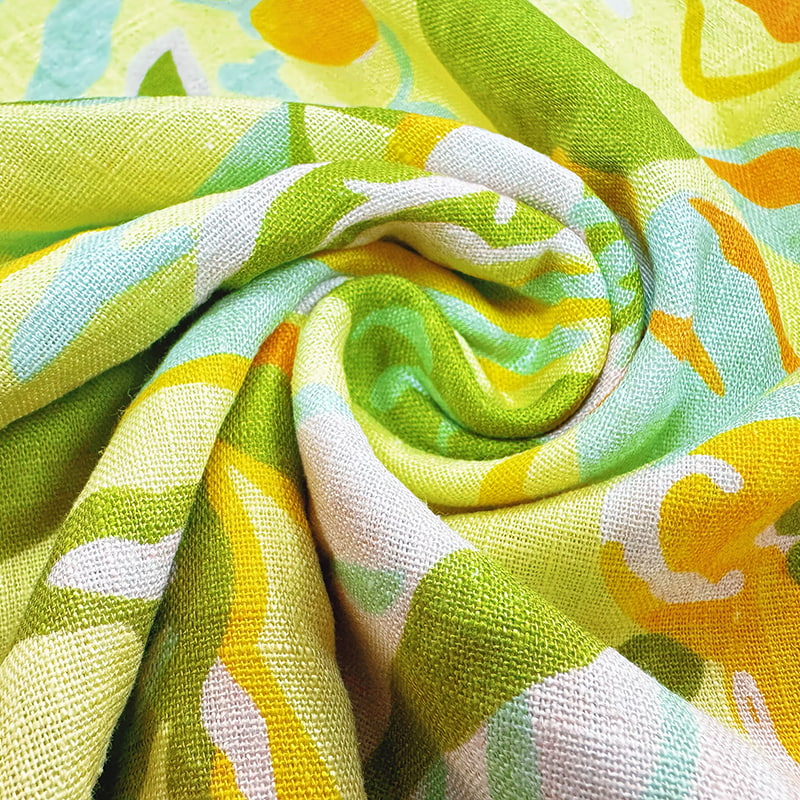
Choosing the right base material is critical for achieving exceptional clarity, durability, and hand feel in modern textile production. When it comes to vibrant, all-over custom graphics, Full Polyester Sublimation Printing Fabric stands as the undisputed industry standard. Operating as a modern technology enterprise specializing in high-end, personalized, and functional fabric printing, ShaoxingRuiyin Textile Co., Ltd. integrates design research and development, advanced digital printing, traditional printing, finishing processes, and complete supply chain services to provide one-stop fabric solutions from concept to finished product.
Core Fiber Properties and Why 100% Polyester is the Gold Standard
The success of dye-sublimation relies entirely on the chemical structure of the underlying textile. Unlike natural fibers such as cotton or linen, synthetic polyester fibers possess a thermoplastic molecular structure that opens up under high heat (typically around 200°C), allowing gasified disperse dyes to penetrate and bond directly into the core of the filament.
Permanent Molecular Bonding: The ink becomes an intrinsic part of the fiber rather than sitting on top as a surface film. This prevents cracking, peeling, or fading over time.
Hydrophobic Nature: Polyester naturally repels moisture, ensuring that printed textiles dry rapidly, resist water-based stains, and maintain structural integrity through repeated industrial laundering.
Color Brilliance: The smooth surface of synthetic filament yarns reflects light uniformly, resulting in sharp, high-definition graphical details and striking color saturation.
Fabric Weight (GSM) Options and Weave Variations
Different end-use applications require specific structural compositions. To help clients select the ideal configuration, the following parameter comparison outlines the common weave variations and grammage options available for Full Polyester Sublimation Printing Fabric:
| Weave Type |
Standard GSM Range |
Key Characteristics |
Primary Applications |
| Interlock |
140 – 180 GSM |
Double-knit construction, smooth face and back, high opacity, excellent dimensional stability. |
Premium athletic jerseys, team uniforms, and activewear. |
| Mesh / Birdseye |
130 – 160 GSM |
Engineered micro-perforations, superior breathability, lightweight, rapid moisture dispersion. |
Hot-weather training gear, side panels, and ventilation zones. |
| Jersey / Single Knit |
150 – 210 GSM |
Soft hand feel, flexible stretch, smooth printable surface, excellent drape. |
Casual lifestyle apparel, resort wear, and fashion tees. |
| Taslan / Woven |
90 – 140 GSM |
High tensile strength, wind-resistant, tightly woven texture, durable finish. |
Lightweight outerwear linings, flags, banners, and promotional displays. |
Moisture-Wicking, Breathability, and Durability Characteristics
High-performance apparel markets demand materials that perform under rigorous physical conditions. Modern production techniques allow mills to engineer advanced functional finishes directly into Full Polyester Sublimation Printing Fabric:
Moisture Management: Capillary action pulls sweat away from the skin toward the outer surface of the fabric for rapid evaporation, keeping wearers cool and dry.
Breathability: Open-knit and mesh configurations maximize airflow without compromising the tensile strength needed for high-speed automated sewing lines.
Tensile Strength and Abrasion Resistance: Synthetic filaments offer superior resistance to tearing and pilling, ensuring that garments withstand heavy friction and long-term industrial use.
As an enterprise equipped with a comprehensive range of printing techniques—including digital printing, traditional printing, and special functional printing—ShaoxingRuiyin Textile Co., Ltd. delivers professional color management using ICC color correction to ensure screen designs, proofing, and final production maintain high color consistency. Through professional fabric consultation services, rapid digital proofing, and flexible production capabilities ranging from tens of meters to thousands of meters, every meter of Full Polyester Sublimation Printing Fabric is crafted to meet rigorous international performance standards.
Why Global Brands Choose Full Polyester Sublimation Printing Fabric for Custom Apparel
When top-tier apparel brands and designers prepare collections for global markets, material selection dictates whether a product succeeds or fails on the retail floor. Achieving striking visual aesthetics without sacrificing structural integrity requires a textile that bridges creative freedom and industrial reliability. ShaoxingRuiyin Textile Co., Ltd. embraces an innovation-driven approach, continuously investing in new technology research and tracking global color and pattern trends to ensure that every roll of Full Polyester Sublimation Printing Fabric delivers forward-looking design inspiration and uncompromising performance.
Molecular Bonding Process: Heat, Pressure, and Ink Penetration
The defining characteristic of dye-sublimation lies in how the color interacts with the textile substrate at a molecular level. Unlike traditional pigment printing or screen printing—where inks form a colored layer sitting on top of the fabric—sublimation utilizes thermal transformation.
The Thermal Phase Shift: During the printing phase, specialized disperse inks are transferred via heat press or calendar machine at temperatures ranging from 190°C to 210°C.
Fiber Expansion: Under this sustained heat, the synthetic polymer chains of the polyester filament temporarily relax and open up.
Permanent Encapsulation: The gasified dye molecules diffuse directly into the core of the individual fibers. As the fabric cools, the polymer pores close, locking the pigment permanently inside the matrix.
Performance Comparison: Sublimation Printing vs. Traditional Surface Printing
To understand why global apparel houses prefer this method for custom manufacturing, the following parameter comparison highlights the distinct structural and functional differences between dye-sublimation and conventional surface printing techniques:
| Performance Metric |
Full Polyester Sublimation Printing |
Traditional Screen / Pigment Printing |
| Ink Integration |
Embedded inside the molecular core of the polyester fiber. |
Forms a physical film or coating on top of the fabric surface. |
| Hand Feel (Softness) |
Completely weightless; zero change to the natural drape and breathability of the base fabric. |
Can feel stiff, heavy, or rubbery, particularly on large solid graphic areas. |
| Durability Over Time |
Permanent colorfastness; will never crack, peel, or flake through repeated washing. |
Prone to fading, cracking, and surface peeling after intensive industrial laundering. |
| Design Complexity |
Unlimited color spectrum, smooth tonal gradients, and intricate multi-color all-over prints at no extra cost. |
Limited by the number of screens or plates; high setup costs for complex multi-tone designs. |
| Environmental Impact |
Utilizes eco-friendly, water-based disperse inks with minimal wastewater discharge. |
Often requires heavy chemical binders, plastisols, and extensive water rinsing cycles. |
Permanent Vibrant Color Reproduction and Tensile Stability
For large-scale apparel programs, consistency across production batches is non-negotiable. Because the ink becomes part of the yarn itself, the resulting graphics withstand harsh environmental exposures, UV radiation, and continuous friction. Furthermore, the inherent mechanical strength of polyester ensures high dimensional stability.
Centred squarely on customer collaboration, ShaoxingRuiyin Textile Co., Ltd. functions as a reliable external research and development and production partner. By combining professional color management protocols with stringent quality control standards from raw materials to finished goods, the factory ensures that every meter of Full Polyester Sublimation Printing Fabric maintains optimal tensile strength, high dimensional stability, and flawless color fidelity for high-speed automated sewing lines.
Industrial Processing and Production Capabilities of Full Polyester Sublimation Printing Fabric
Transforming raw synthetic yarn into high-precision, ready-to-sew material requires rigorous factory-level engineering. Mass production demands exact uniformity, strict tolerance levels, and seamless coordination across every stage of the manufacturing workflow. Operating as a modern technology enterprise specializing in high-end, personalized, and functional fabric printing, ShaoxingRuiyin Textile Co., Ltd. integrates design research and development, digital printing, traditional printing, finishing processes, and complete supply chain services to oversee every phase of production under one roof.
Fabric Pre-Treatment and Anti-Shrinkage Stabilization
Before any ink touches the surface, the base textile undergoes intensive mechanical and chemical preparation. Raw polyester woven and knitted goods naturally carry spinning oils, sizing agents, and internal tensions that can compromise print clarity and dimensional accuracy.
Scouring and Heat-Setting: Fabrics are subjected to high-temperature tentering frames to relax internal fiber stresses, locking in precise width and GSM specifications while eliminating post-production shrinkage.
Surface Polishing and Anti-Pilling Treatments: Specialized shearing and enzymatic treatments clear away loose surface fuzz, creating an ultra-smooth canvas essential for high-resolution digital transfer.
Production Method and Technical Specifications Comparison
Different manufacturing runs require distinct technical machinery to balance speed, detail definition, and cost efficiency. The following parameter comparison outlines the industrial printing techniques utilized during mass production:
| Industrial Printing Method |
Typical Production Speed |
Maximum Resolution & Detail |
Best Suited For |
| High-Speed Digital Transfer Printing |
300 to 600 meters per hour |
Ultra-high definition (up to 1440 DPI), photographic gradients, multi-color all-over designs. |
Small-to-medium batches, rapid sampling, complex multi-color artwork, and personalized custom apparel. |
| Rotary Screen Printing |
1,500 to 3,000 meters per hour |
High-speed continuous pattern repetition, solid spot colors, geometric prints. |
Large-volume mass production runs featuring repetitive classic patterns and uniform color palettes. |
Strict Quality Control and Compliance Protocols
Maintaining international export standards requires comprehensive testing throughout the entire manufacturing lifecycle. ShaoxingRuiyin Textile Co., Ltd. implements a full-process service chain featuring professional color management, utilizing ICC color correction to ensure that screen designs, digital proofing, and final mass-produced goods maintain exceptional color consistency.
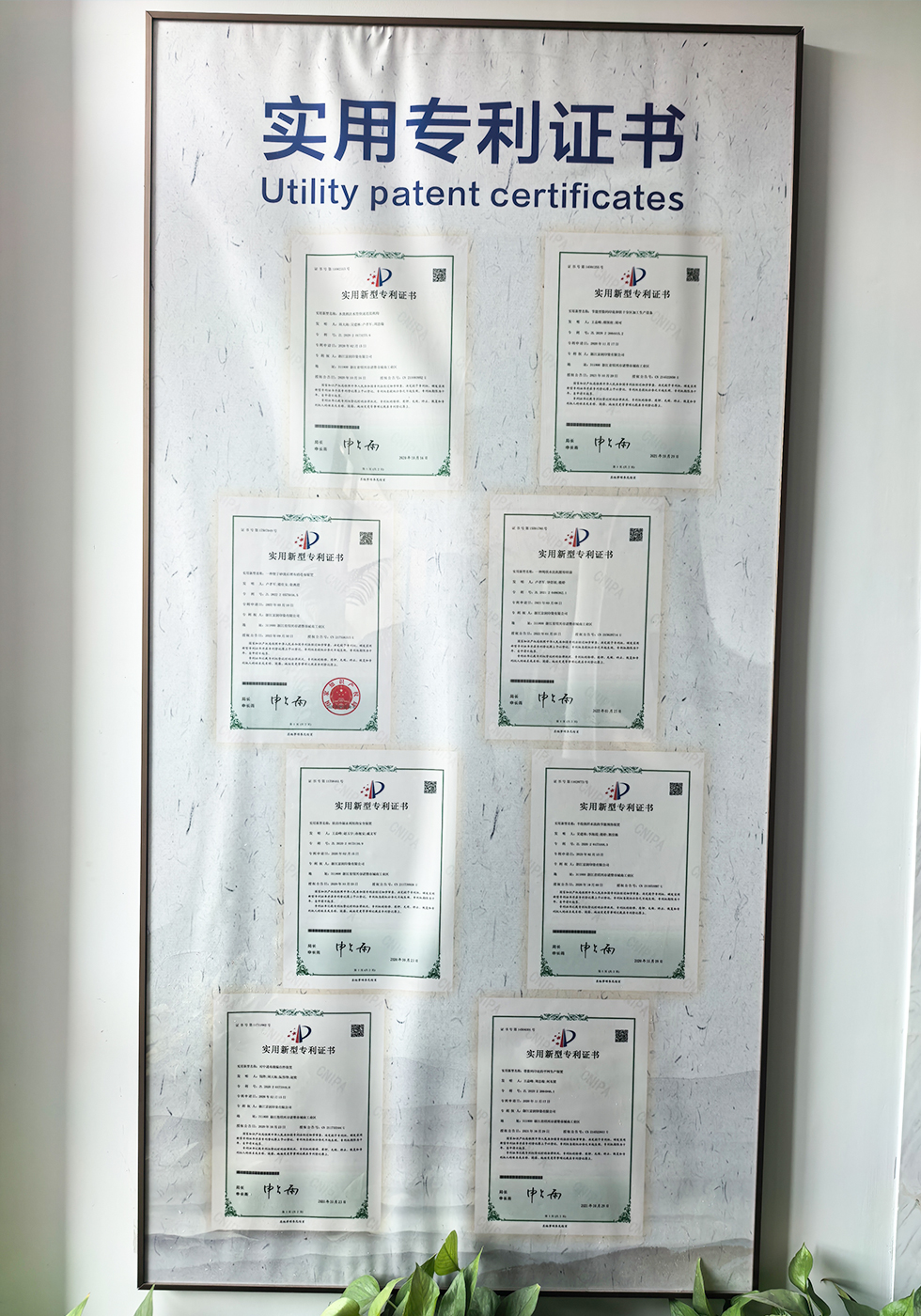
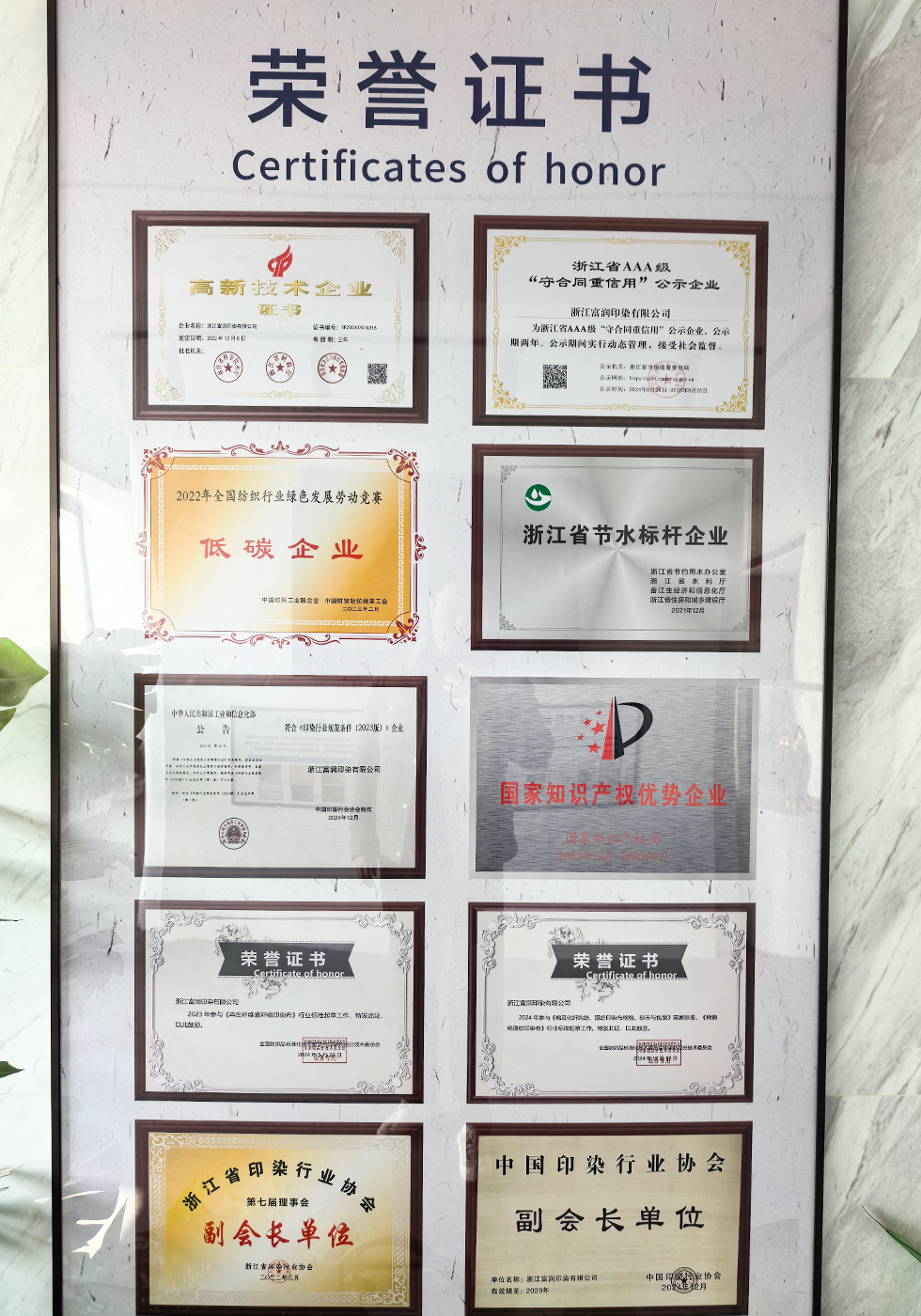
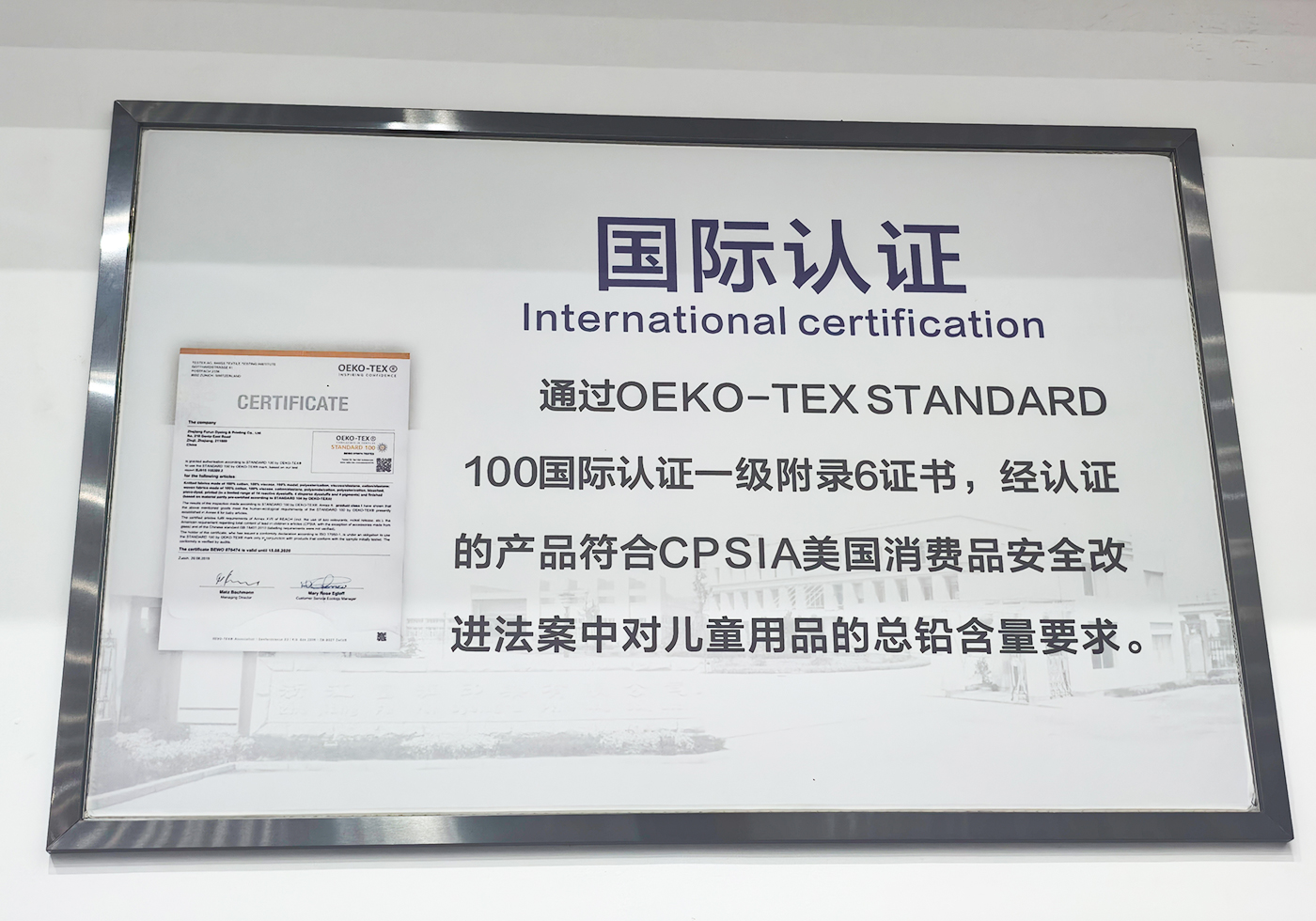
Every batch of Full Polyester Sublimation Printing Fabric undergoes rigorous evaluation, including colorfastness to washing and perspiration, anti-pilling grading, and tear strength testing. Adhering strictly to eco-friendly manufacturing values, the factory utilizes high-strength dyes and inks in full compliance with Oeko-Tex Standard 100, guaranteeing complete safety, regulatory compliance, and long-term durability for global apparel and textile markets.
Key Industrial Applications across Global Markets
The true value of high-grade textile engineering lies in its versatility across diverse commercial sectors. Because modern consumers and brand clients demand both aesthetic appeal and long-lasting functional performance, selecting a reliable production partner is essential. ShaoxingRuiyin Textile Co., Ltd. leverages its comprehensive range of printing techniques—spanning digital printing, traditional printing, and special functional printing—to supply high-end materials tailored to the exact requirements of the fashion industry, home decoration, outdoor and sports, and cultural and gift markets.
Athletic and Sportswear
Performance wear represents one of the largest segments utilizing synthetic textiles, where garment comfort directly impacts athletic execution.
Team Jerseys and Active Training Gear: Lightweight interlock and mesh weaves allow for rapid body heat dissipation. The permanent molecular bonding of sublimation ensures that team logos, sponsor graphics, and player numbers never crack or peel, even during intense physical friction and frequent industrial laundering.
Compression Wear and Swimwear: High-stretch polyester blends maintain elasticity and structural recovery while delivering UPF sun protection and chlorine resistance.
Promotional and Event Textiles
Visual impact and durability under outdoor conditions are primary drivers for event marketing and corporate branding.
Custom Flags and Banners: Tight-weave taslan and lightweight knitted polyester offer excellent wind resistance and vibrant color show-through on reverse sides, ensuring maximum brand visibility at trade shows, stadiums, and outdoor exhibitions.
Corporate Wear and Trade Show Displays: Customized tablecloths, promotional canopies, and backdrops benefit from wrinkle-resistant finishes and high dimensional stability, allowing for repeated packing, transit, and setup without losing aesthetic quality.
Fashion and Lifestyle Apparel
The modern fashion sector increasingly relies on all-over printing and complex graphic motifs to capture fast-moving trends.
Resort Wear and Fashion Tees: Single-knit and lightweight woven textures provide a soft, luxurious hand feel combined with unlimited color expression, enabling designers to execute intricate multi-tone patterns seamlessly.
Performance Linings: Specialized functional printing allows brands to incorporate hidden interior branding, moisture-managing comfort layers, and unique visual elements into high-end outerwear.
Application Performance Matrix
To assist product developers and brand managers in choosing the ideal configuration, the following parameter comparison outlines the recommended fabric weights and key performance traits across major industrial sectors:
| Industrial Sector |
Recommended Fabric Weight (GSM) |
Primary Weave Structure |
Key Functional Focus |
| Athletic & Sportswear |
130 – 190 GSM |
Interlock, Birdseye Mesh, Single Jersey |
Moisture-wicking, breathability, high stretch, and abrasion resistance. |
| Promotional & Event |
90 – 140 GSM |
Taslan, Woven Polyester, Lightweight Knit |
UV resistance, wind-shedding, vibrant color saturation, and portability. |
| Fashion & Lifestyle |
150 – 220 GSM |
Soft Jersey, Interlock, Fine Woven |
Luxurious hand feel, excellent drape, rich color gradients, and skin comfort. |
Through rapid response capabilities and a deep understanding of fast-fashion market demands, ShaoxingRuiyin Textile Co., Ltd. helps brand partners move seamlessly from concept to finished product, ensuring every application of Full Polyester Sublimation Printing Fabric meets the highest standards of the global marketplace.
Streamlining Bulk Procurement and Factory Supply Chain Partnerships
Securing a stable, high-volume supply of custom-printed textiles requires more than just placing an order; it demands a synchronized manufacturing partnership capable of managing intricate logistical pipelines from raw yarn to container loading. Modern apparel programs and retail brands need total transparency, reliable lead times, and flexible execution. ShaoxingRuiyin Textile Co., Ltd. operates as a comprehensive technology enterprise, integrating design research and development, printing production, finishing processes, and end-to-end supply chain services to serve as a reliable external production partner for brand clients worldwide.
Minimum Order Quantities, Custom Roll Sizing, and Pricing Structures
Efficiency in mass production hinges on optimizing setup costs, chemical dye distribution, and machine calibration cycles. To accommodate diverse project scales—ranging from exclusive capsule collections to massive seasonal retail rollouts—flexible manufacturing models are essential.
Flexible Production Volumes: Supported by on-demand production frameworks, manufacturing capabilities easily scale from tens of meters for prototype testing up to tens of thousands of meters for full-scale commercial distribution.
Custom Roll Dimensions: Standard mill rolls are typically produced in lengths ranging from 100 to 300 meters, wound tightly on sturdy cardboard cores with custom width options (ranging from 150 cm to 180 cm) to minimize cutting waste in automated apparel factories.
Supply Chain Logistics and Technical Service Specifications
To maintain seamless international operations, clear operational parameters govern factory-direct orders. The following parameter comparison details the core logistical and service specifications associated with bulk procurement:
| Supply Chain Parameter |
Standard Factory Specification / Option |
Operational Benefit for Global Clients |
| Minimum Order Quantity (MOQ) |
500 meters per design / color (Standard); 2,000+ meters for custom Pantone matching and bespoke GSM weights. |
Balances dye calibration efficiency with reasonable inventory thresholds for seasonal programs. |
| Sampling & Laboratory Dips |
Digital strike-off sampling within 3 to 5 days; professional ICC color-matched lab dips. |
Accelerates design decision-making and ensures screen-to-fabric color accuracy before mass cutting. |
| Bulk Production Lead Times |
15 to 25 days following final lab dip and digital strike-off sign-off. |
Secures fast turnaround windows to align with strict retail launch schedules and fast-fashion cycles. |
| Packaging & Export Logistics |
Moisture-barrier polybag inner wrap, heavy-duty woven outer sleeve; compatible with FOB, CIF, and EXW terms. |
Guarantees fabric arrives across international freight corridors free from water damage, creasing, or transit friction. |
Full-Process Service Integration from Concept to Finished Product
Managing international textile logistics becomes seamless when working with an integrated manufacturer. ShaoxingRuiyin Textile Co., Ltd. provides a complete full-process service chain designed to eliminate supply chain friction:
Professional Color Management: Utilizing advanced ICC color correction to guarantee that screen designs, digital proofing, and final mass-produced rolls maintain high visual consistency.
Expert Fabric Consultation: Recommending the ideal base materials—whether specialized polyester blends, cotton, linen, silk, wool, or nylon—and printing techniques based on the exact end-use application.
Strict Quality Inspection: Implementing rigorous inspection standards across raw material sourcing, the printing process, and finished roll packaging to guarantee timely delivery and defect-free inventory.
Frequently Asked Questions (FAQ)
What is the typical Minimum Order Quantity (MOQ) for custom-printed Full Polyester Sublimation Printing Fabric?
For standard stock catalog patterns or basic white base fabrics, minimum order quantities generally start around 500 meters per design. For bespoke pantone matching, custom fabric grammages, or specialized structural weaves, production runs typically begin at 2,000 meters to optimize chemical dyeing and sublimation machine calibration costs.
How does the sublimation process interact specifically with 100% polyester fibers compared to natural fabrics?
Sublimation printing relies on synthetic polymer chains to achieve a permanent molecular bond. Under sustained thermal activation (around 200°C), polyester fibers temporarily expand, allowing gasified disperse inks to penetrate directly into the core of the filament. Once cooled, the fiber pores lock the pigment permanently inside. Natural fibers like cotton lack these synthetic polymer structures, causing the ink to wash out immediately.
What quality certifications should international brand teams look for when sourcing this fabric?
Sourcing partners should maintain internationally recognized credentials, such as Oeko-Tex Standard 100 certification to verify the complete absence of harmful chemical residues, alongside ISO 9001 quality management systems. Additional performance reports—including AATCC standards for colorfastness to laundering, perspiration, and crocking—are essential for ensuring retail-grade durability.
What are the recommended fabric GSM ranges for different end-use applications?
Lightweight options (130 to 160 GSM) are ideal for high-performance athletic t-shirts, active training jerseys, and promotional flags. Medium weight options (170 to 220 GSM) suit structured team wear, athletic shorts, and fashion apparel. Heavier options (230+ GSM) are optimized for specialized outerwear linings, heavy banners, and durable event displays.
What are the standard lead times for bulk production orders from direct manufacturing facilities?
Standard bulk manufacturing lead times range from 15 to 25 days following the final approval of laboratory dips and digital strike-offs. Total transit time depends on the agreed international shipping terms (such as FOB or CIF) and whether the freight is dispatched via ocean container or air cargo.
 English
 中文简体
中文简体 Español
 عربى
عربى