Understanding the Composition: What Makes Nylon/Viscose Blends Unique?
The intersection of synthetic durability and natural comfort defines modern textile engineering. Nylon/Viscose (N/V) fabric brings together two distinct polymer structures to create a material that performs exceptionally well across demanding apparel applications. Understanding the underlying science helps garment makers and project coordinators select the right material weight and structure for their production lines.
The Science of Combining Synthetic Resilience with Natural Drape and Softness
At the core of this material is a synergistic blend of polyamide (nylon) and regenerated cellulose (viscose). Nylon contributes high tensile strength, elasticity, and abrasion resistance, while viscose provides a luxurious hand-feel, excellent moisture management, and a fluid drape.
When engineered into a single textile, the synthetic component reinforces the structure against tearing and seam slippage, whereas the cellulosic fibers ensure the fabric feels comfortable against the skin. This balance allows designers to create garments that maintain their shape over extended wear without sacrificing softness or elegance.
Technical Comparison: Nylon/Viscose Blend vs. 100% Viscose and 100% Nylon
To evaluate how the N/V blend stacks up against single-fiber alternatives, consider the following performance parameters typically recorded during textile laboratory testing:
| Performance Metric |
Nylon/Viscose (N/V) Blend |
100% Viscose |
100% Nylon |
| Tensile Strength |
High (Enhanced by nylon filament reinforcement) |
Moderate to Low (Prone to tearing when wet) |
Very High (Exceptional break resistance) |
| Drape & Fluidity |
Excellent (Balanced by viscose weight) |
Exceptional (Fluid and heavy drape) |
Stiff to Moderate (Depending on denier and weave) |
| Moisture Absorption (Regain) |
Good (Approx. 4 percent to 11 percent combined) |
High (Approx. 11 percent to 13 percent, slow drying) |
Low (Approx. 0.4 percent, quick drying) |
| Dimensional Stability |
Stable (Minimal shrinkage with proper finishing) |
Low (High susceptibility to shrinking and stretching) |
High (Resistant to stretching and shrinking) |
| Abrasion Resistance |
Superior (Withstands frequent mechanical friction) |
Moderate (Prone to surface fuzzing over time) |
Outstanding (Industrial-grade wear resistance) |
Moisture Absorption, Breathability, and Skin-Friendly Properties
For apparel destined for direct skin contact, moisture management is critical. While 100% synthetic fabrics often trap perspiration and cause discomfort, the viscose component in the N/V blend absorbs moisture vapor effectively, allowing it to dissipate into the air.
At ShaoxingRuiyin Textile Co., Ltd., our technical team carefully calibrates the fiber ratio during the preliminary consultation phase to ensure the resulting textile meets specific breathability targets. By maintaining rigorous control over raw material selection—ensuring high-grade filament nylon and premium viscose pulp are utilized—we provide a stable foundation for subsequent processes, such as digital printing and specialized anti-shrinkage finishing.
The Power of Digital Textile Printing on N/V Blends
Transforming blended textiles through advanced printing technologies requires a precise balance of chemistry, machinery, and technical expertise. Nylon/Viscose (N/V) Digital Printing Fabric demands specialized processing because the two constituent fibers—synthetic polyamide and regenerated cellulose—have entirely different dye affinities and surface characteristics. Mastering this interaction is essential for achieving exceptional visual depth and colorfastness in modern garment manufacturing.
How Reactive and Acid Digital Printing Interact with Nylon and Viscose Fibers
Because an N/V blend combines two fundamentally different polymer systems, standard printing techniques often fall short. Viscose fibers require reactive dyes that form covalent bonds under alkaline conditions, whereas nylon filaments typically accept acid or pre-metalized dyes in slightly acidic environments.
To bridge this gap during high-end production, specialized pre-treatment formulas are applied to prepare the greige fabric. At ShaoxingRuiyin Textile Co., Ltd., our engineering team utilizes professional color management protocols—including ICC color correction—to ensure that digital inkjet printing parameters, steaming temperatures, and fixation times harmonize perfectly. This eliminates color bleeding at the fiber boundaries and guarantees that multi-component designs render with crisp edges and uniform saturation.
Achieving High-Definition Prints and Vibrant Color Gamuts
Modern apparel markets demand photographic clarity, smooth tonal gradations, and rich color gamuts that traditional printing plates cannot replicate. When printing on Nylon/Viscose (N/V) Digital Printing Fabric, high-resolution piezoelectric printheads deposit micro-droplets of ink directly onto the fabric surface.
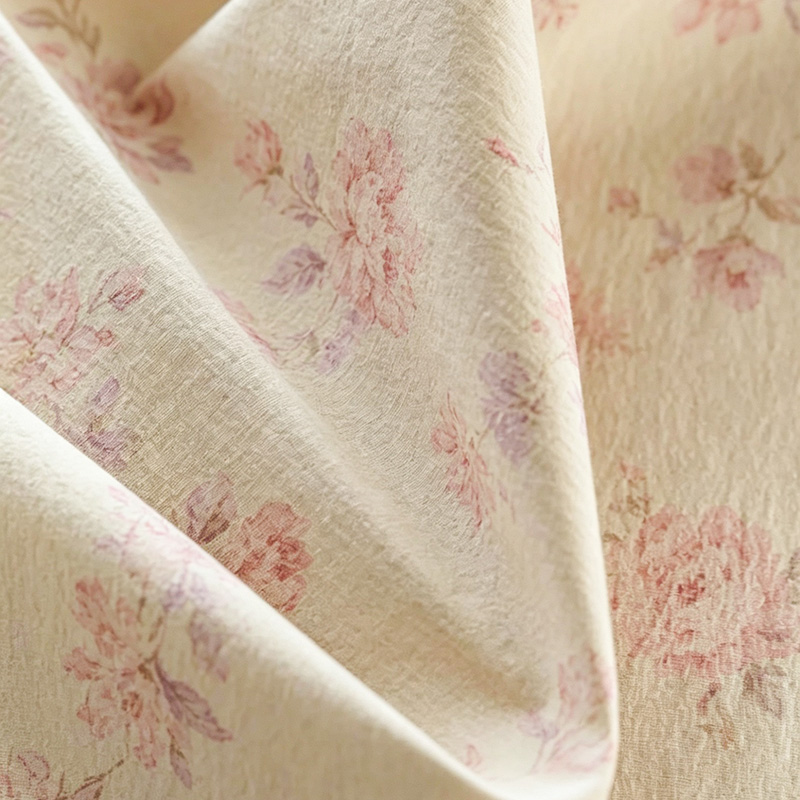
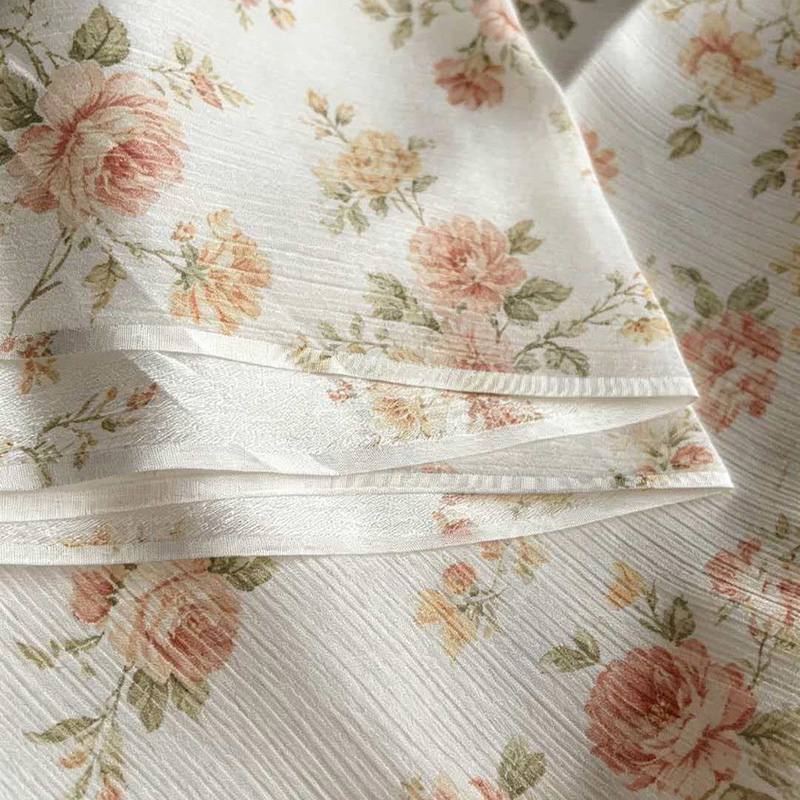
The viscose portion absorbs the colorants deeply to produce rich, saturated hues, while the nylon surface reflects light slightly to give the prints a subtle, premium luster. To maintain absolute consistency between initial digital proofs and bulk production, our rapid proofing service allows brand clients to validate color calibration before full-scale manufacturing begins.
Technical Advantage: Digital Printing vs. Traditional Rotary Screen Printing
For fashion brands and apparel creators weighing production methods, the shift from traditional rotary screen printing to digital workflows offers distinct operational advantages, particularly when handling complex N/V fabric collections.
| Evaluation Factor |
Digital Textile Printing |
Traditional Rotary Screen Printing |
| Design Complexity & Colors |
Unlimited colors, photographic gradients, and infinite repeat lengths |
Limited by the number of engraved screens (higher cost per colorway) |
| Minimum Order Requirements |
Highly flexible, supporting short runs and on-demand production |
High minimum yardage required to offset screen engraving costs |
| Water & Chemical Waste |
Minimal waste; precise ink deposition with zero-wash printhead maintenance |
Substantial water consumption required for continuous screen washing |
| Lead Time for Sampling |
Rapid turnaround (digital files sent directly to print queues) |
Slow (requires physical screen making and manual color matching) |
Leveraging a flexible production framework that accommodates everything from tens of meters for capsule collections to tens of thousands of meters for mass-market rollouts, ShaoxingRuiyin Textile Co., Ltd. ensures that fabric consultation and rapid proofing streamline the transition from concept to finished product without compromising quality.
Key Technical Specifications and Performance Metrics
Evaluating a textile for large-scale garment production requires a thorough review of physical dimensions, mechanical tolerances, and compliance standards. Because Nylon/Viscose (N/V) Digital Printing Fabric combines synthetic strength with cellulosic comfort, its performance metrics must be closely monitored across various stages of manufacturing—from initial greige fabric selection to final garment construction.
Standard Weight Ranges, Width Variations, and Yarn Counts
The structural integrity of an N/V fabric depends heavily on its construction parameters. Depending on whether the end use is a lightweight summer blouse, a fluid evening dress, or a structured jacket lining, the fabric geometry shifts accordingly.
Weight Range (GSM): Typically spans from 90 GSM for sheer, airy draping applications up to 220 GSM for heavier winter-wear linings and trousers.
Fabric Width: Standard finished widths generally range between 142 cm and 148 cm (cuttable width), accommodating standard marker layouts in garment factories.
Yarn Counts: Usually constructed using fine-denier nylon filament (e.g., 20D to 40D) intertwined with medium-count viscose spun yarns (e.g., 30S to 60S) to achieve a balanced hand-feel.
Dimensional Stability, Shrinkage Rates, and Colorfastness
Garment manufacturers require predictable behavior during cutting, sewing, and industrial laundering. Uncontrolled shrinkage can ruin multi-panel garments, while poor colorfastness leads to customer complaints and high return rates.
Laboratory testing under standardized conditions reveals the baseline performance expected from premium N/V blends:
| Performance Property |
Test Standard |
Acceptable Threshold / Result |
| Dimensional Change (Washing) |
ISO 6330 / AATCC 135 |
Warp: less than or equal to plus or minus 3.0 percent, Weft: less than or equal to plus or minus 2.5 percent (after 3 domestic washes at 40 degrees Celsius) |
| Tensile Strength (Grab Test) |
ISO 13934-1 |
Warp: greater than or equal to 450 N, Weft: greater than or equal to 380 N (Varies by GSM) |
| Seam Slippage Resistance |
ISO 13936-2 |
Less than or equal to 4 mm opening at 180 N load |
| Colorfastness to Washing |
ISO 105-C06 |
Grade 4 to 5 (Staining and color change) |
| Colorfastness to Light |
ISO 105-B02 |
Grade 4 minimum (Xenon arc lamp exposure) |
Nylon/Viscose (N/V) Digital Printing Fabric: Detailed Specifications Breakdown for Bulk Orders
To bridge the gap between creative design and industrial execution, ShaoxingRuiyin Textile Co., Ltd. applies rigorous quality control protocols throughout the production lifecycle. Every production batch of Nylon/Viscose (N/V) Digital Printing Fabric undergoes strict greige fabric testing, precise color verification under standardized D65 light boxes, and chemical safety checks.
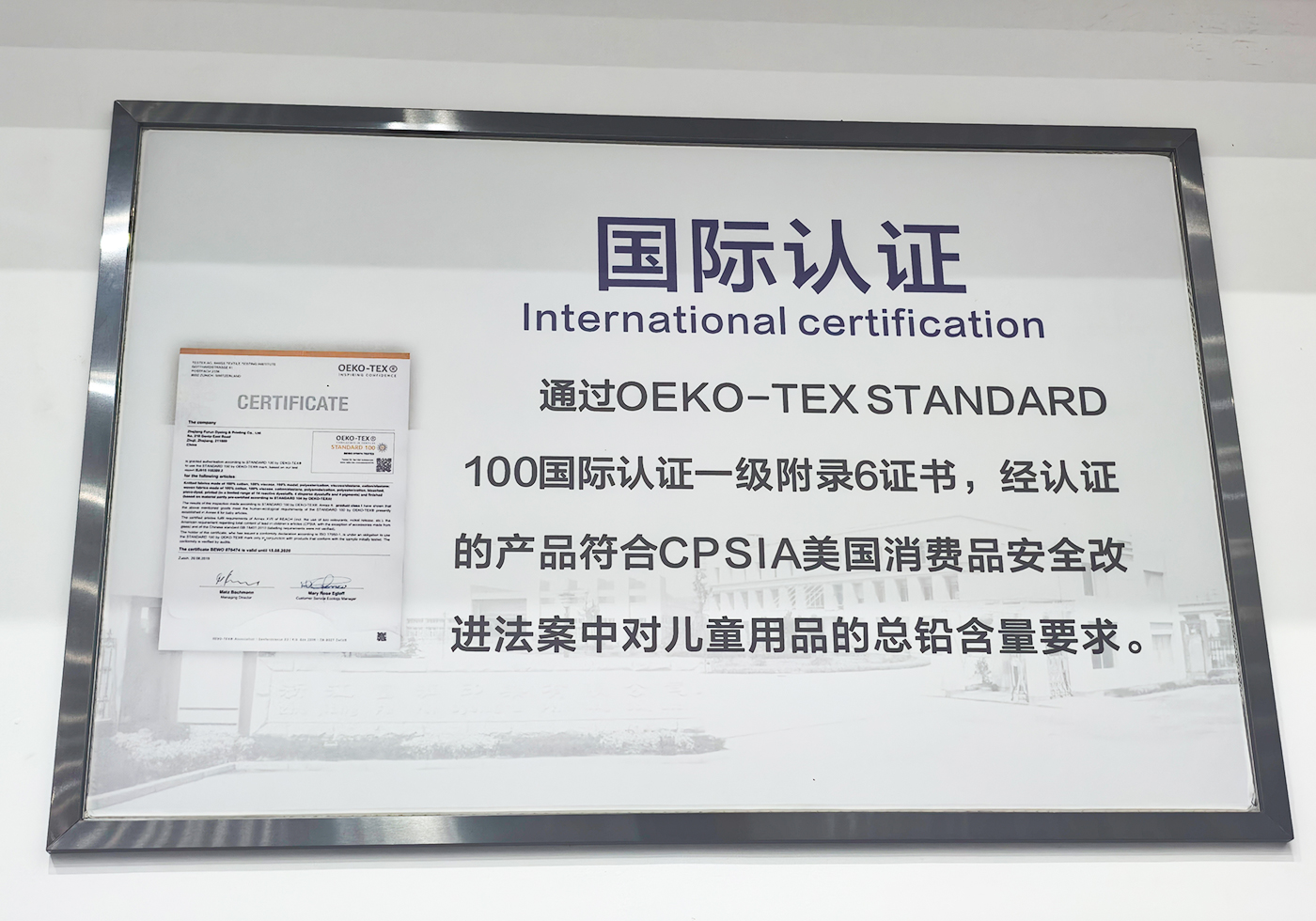
By strictly adhering to global environmental benchmarks such as Oeko-Tex Standard 100, the company ensures that all eco-friendly dyes and high-strength fixing agents used in the digital printing process are entirely safe for direct skin contact. Whether fulfilling a trial order or managing a large-scale seasonal rollout, maintaining these meticulous specifications guarantees that the fabric performs reliably on high-speed sewing lines.
Primary Applications in Modern Apparel Manufacturing
The unique fusion of synthetic resilience and natural comfort makes Nylon/Viscose (N/V) Digital Printing Fabric exceptionally versatile for contemporary fashion and apparel engineering. By merging the structural durability of polyamide with the fluid drape of regenerated cellulose, designers and garment producers can execute complex structural silhouettes without sacrificing next-to-skin breathability.
High-End Fashion Garments: Dresses, Skirts, Lightweight Blouses, and Fluid Trousers
In high-end womenswear and contemporary fashion collections, fabric movement is everything. The N/V blend provides a natural, weighted drape that allows garments to flow gracefully with body movement while resisting the excessive stretching common in 100 percent cellulosic textiles.
When enhanced with high-definition digital prints, these fabrics excel in categories such as:
Fluid Dresses and Skirts: The material holds sharp pleats and gathered tiers effectively while maintaining a soft, luxurious hand-feel.
Lightweight Blouses: The balance of nylon strength allows for finer yarn counts, creating semi-sheer or opaque shirting that remains durable across repeated industrial laundering.
Relaxed Trousers: The inclusion of synthetic filament adds necessary tensile strength along high-stress seams, preventing premature fabric fatigue during active daily wear.
Luxury Lining Solutions for Premium Winter Coats and Structured Jackets
Beyond outer shell applications, high-performance linings represent a major segment of luxury garment manufacturing. A superior lining must reduce friction against underlying layers, manage internal microclimates, and withstand mechanical stress at the shoulders and armscyes.
Using Nylon/Viscose (N/V) Digital Printing Fabric as an interior lining transforms functional utility into a brand statement. Instead of plain, monochromatic linings, brands can incorporate custom interior branding, artistic patterns, or signature color palettes.
| Lining Attribute |
100 percent Polyester Lining |
Standard Viscose Lining |
Nylon/Viscose (N/V) Digital Printed Lining |
| Friction & Slip |
Smooth, but prone to static buildup |
Good slip, low static |
Superior slip with excellent anti-static behavior |
| Breathability |
Low (Trap body heat and moisture) |
High (Comfortable, but low tear strength) |
Balanced (Optimum moisture vapor transmission with high tear resistance) |
| Design Customization |
Limited or basic dyed patterns |
Difficult to print with high-definition detail |
High-definition digital printing with unlimited colorways |
Activewear-Meets-Leisurewear Hybrids
The boundary between athletic performance and everyday casual wear continues to blur. Consumers demand garments that look tailored and elegant but behave with the flexibility of activewear.
To support these hybrid product lines, ShaoxingRuiyin Textile Co., Ltd. works closely with brand clients during the fabric consultation phase. By analyzing the intended garment mechanics, our technical team recommends optimal fiber ratios and finishing treatments—such as moisture-wicking finishes or mechanical stretch configurations—ensuring the resulting textile meets rigorous performance criteria. Whether developing a limited capsule collection or executing full-scale rollouts, integrating custom-printed N/V fabrics elevates the final garment's market value and functional longevity.
Sourcing from Direct Manufacturers: Quality Control and Supply Chain Reliability
Securing a consistent, high-performing supply of textile inputs is critical for apparel brands and design houses scaling their seasonal collections. When dealing with specialized materials like Nylon/Viscose (N/V) Digital Printing Fabric, partnering directly with an experienced producer eliminates intermediary friction and ensures strict adherence to technical specifications from raw fiber to final roll.
Raw Material Sourcing: The Foundation of Premium Blends
The performance of any blended fabric starts long before the printing press touches the surface. Achieving consistent tear resistance, soft hand-feel, and uniform dye absorption requires strict control over incoming raw materials.
Filament Nylon: Sourced from high-grade polymer chips to guarantee consistent tensile strength, stable elongation properties, and reliable filament integrity.
Viscose Pulp: Selected from premium-grade cellulosic sources that provide high purity, consistent whiteness, and optimal swelling behavior for reactive dye fixation.
At ShaoxingRuiyin Textile Co., Ltd., our supply chain management integrates raw material vetting directly into our manufacturing workflow, ensuring that every batch of greige fabric meets exacting structural benchmarks before moving to the print floor.
In-House Processing Standards: From Pre-Treatment to Finishing
Managing the entire lifecycle of a textile under one roof ensures seamless quality control. Because nylon and viscose react differently to moisture and heat, treating them requires a tightly synchronized sequence of mechanical and chemical steps.
| Processing Stage |
Technical Objective |
Key Operational Control |
| Fabric Pre-Treatment |
Remove sizing agents and impurities; optimize surface for dye uptake |
Controlled scouring, enzymatic desizing, and heat-setting |
| Digital Inkjet Printing |
Deposit high-resolution patterns with zero mechanical contact |
Piezoelectric printheads paired with ICC color correction |
| Fixation & Steaming |
Lock dye molecules into respective fiber structures |
Precision temperature-controlled steaming and curing chambers |
| Washing & Finishing |
Remove unfixed surface dyes; impart desired drape and stability |
Multi-stage continuous open-width washing and anti-shrinkage finishing |
Bulk Inspection Protocols and Environmental Compliance
Quality assurance must be measurable and repeatable across large production runs. Before any container leaves the facility, rigorous inspection protocols are enforced. Greige fabric is checked for structural flaws, color matching is verified under standardized D65 light boxes to eliminate metamerism, and physical testing ensures compliance with international standards.
Furthermore, modern apparel production demands environmental responsibility. ShaoxingRuiyin Textile Co., Ltd. utilizes eco-friendly dyes and high-strength fixing agents that comply fully with environmental frameworks such as Oeko-Tex Standard 100. By combining comprehensive in-house processing with strict safety standards, we serve as a reliable production partner for brands seeking both high-end aesthetic execution and verified supply chain integrity.
Commercial Terms, Customization, and Bulk Procurement
Navigating the commercial and operational aspects of international textile procurement requires clear guidelines, flexible production frameworks, and transparent communication. When ordering specialized textiles like Nylon/Viscose (N/V) Digital Printing Fabric, understanding minimum requirements, logistical packaging, and production timelines ensures that seasonal schedules remain on track.
Minimum Order Quantity Structures for Custom Digital Patterns Versus Stock Designs
Flexibility in order volumes is essential for modern fashion brands balancing fast-moving trends with inventory control. Traditional printing methods often impose prohibitive minimum yardage constraints due to the labor and expense of engraving physical screens. In contrast, digital printing revolutionizes workflow efficiency by eliminating physical plates entirely.
Custom Digital Patterns: Supported by agile production capabilities, orders can scale dynamically from tens of meters for prototype development and capsule collections up to tens of thousands of meters for full-scale seasonal rollouts.
Stock Designs and Colorways: Maintained with lower barriers for entry, allowing design teams to test market response rapidly without locking up excessive capital in raw inventory.
At ShaoxingRuiyin Textile Co., Ltd., our flexible production framework accommodates orders of varying scales, ensuring that whether a client requires rapid proofing for initial design validation or large-scale manufacturing, production schedules are managed with precision.
Packaging Options for International Shipping
Protecting high-end textiles during long-haul transit is critical to preventing moisture damage, creasing, and mechanical abrasion. Standard export packaging protocols are engineered to withstand rigorous ocean or air freight conditions:
| Packaging Layer |
Material Specification |
Primary Functional Purpose |
| Inner Core |
Hard paper tubes (heavy-duty spiral wound) |
Prevents fabric crushing and maintains roll cylinder shape |
| Moisture Protection |
Inner waterproof polyethylene film bag |
Shields fabric from humidity, condensation, and rain during transit |
| Outer Wrapping |
Heavy-duty woven plastic sleeve or robust craft paper |
Resists surface tearing, friction, and rough handling at ports |
| Container Optimization |
Vacuum-sealed or compressed palletization (upon request) |
Maximizes volumetric efficiency for full container load shipments |
Lead Times for Sample Development, Laboratory Dips, and Full-Scale Production
Predictable turnaround times enable apparel manufacturers to synchronize garment assembly with retail delivery windows. The standard workflow follows a structured timeline designed to eliminate errors before mass production begins:
Fabric Consultation and Recommendation: Reviewing end-use requirements and selecting the optimal N/V base weight and printing technique (1 to 2 business days).
Rapid Proofing and Lab Dips: Generating digital strike-offs and color-matched proofs using advanced ICC color correction protocols (3 to 5 business days).
Bulk Production: Executing full-scale printing, steaming, washing, and anti-shrinkage finishing (typically 12 to 20 business days, depending on total yardage and finishing complexity).
Frequently Asked Questions (FAQ) and Technical Insights
What is the optimal washing and care instruction for garments made of Nylon/Viscose (N/V) Digital Printing Fabric?
Garments crafted from this blend should generally be machine washed on a gentle cycle at low temperatures (not exceeding 30 degrees Celsius) using mild, neutral detergents. Avoid harsh bleaching agents or chlorine, as they can degrade the cellulosic viscose fibers and compromise print vibrancy. Line drying in the shade or tumble drying on low heat is recommended to preserve dimensional stability and prevent excessive thermal shrinkage.
How does the N/V blend perform regarding pilling and static electricity during mass garment production?
The inclusion of high-strength nylon filament significantly improves abrasion resistance, which naturally reduces surface pilling compared to 100 percent spun cellulosic fabrics. While synthetic fibers can occasionally accumulate static, the high moisture regain of the viscose component helps dissipate electrical charges during standard atmospheric conditions, ensuring smooth handling through high-speed industrial sewing and cutting equipment.
Can we supply our own Pantone colors or CAD artwork for custom digital printing?
Yes. Digital printing workflows accept vector files, high-resolution TIFF formats, and specific Pantone color references. ShaoxingRuiyin Textile Co., Ltd. utilizes professional color management systems and ICC color profiling to match digital art files against physical fabric outputs, ensuring precise color accuracy between screen displays and final production rolls.
What are the standard payment terms and shipping methods for global bulk procurement?
Standard commercial arrangements typically involve flexible letter of credit or telegraphic transfer structures, customized based on order scale and client partnership agreements. Shipments are dispatched flexibly via major international ports using sea freight for container loads or air express for urgent sample deliveries, ensuring seamless logistics integration worldwide.
 English
 中文简体
中文简体 Español
 عربى
عربى