2026.10.06
 Industry News
Content
Every few weeks, a product developer sends us the same question wrapped in a slightly different sentence: "Is 80% cotton and 20% polyester actually a good blend?" Sometimes it arrives from a brand building a summer capsule; sometimes it comes from a sourcing manager who has been quoted three different prices for what looks like the same greige fabric. The question is short, but the answer has layers, because 80/20 cotton-polyester is not a single fabric. It is a family of fabrics, and its quality lives or dies in how the yarn is spun, how the greige is woven, and how the surface is printed and finished.
From where we sit, running digital and reactive printing lines through hundreds of thousands of metres each year, the honest answer is this: 80% cotton and 20% polyester is a genuinely good blend for a very wide range of everyday textiles, and a poor choice for a small but important set of them. The trick is knowing which side of that line your project falls on.
An 80/20 blend means the yarn contains 80 percent cotton fibre and 20 percent polyester fibre by weight, blended either at the spinning stage or during weaving. The polyester is not a coating and it is not a finish that washes out. It sits inside the yarn structure, which is exactly why the performance it delivers is permanent.
It helps to think about the blend in terms of fibre count rather than fibre weight. Polyester is lighter and stronger per unit of weight than cotton, so 20 percent by weight translates into a considerably higher share of individual fibres across the yarn cross-section. That is why a fabric that is "only" one-fifth polyester behaves so differently from pure cotton.
Cotton carries the hand feel. It brings softness, a matte natural surface, moisture absorption and skin comfort. It also accepts water-based inks beautifully, which matters enormously once the fabric reaches the printing stage.
Polyester is the structural partner. It raises wet and dry strength, resists wrinkling, reduces shrinkage and helps the fabric hold its shape after repeated laundering and wear.
When those two roles line up properly, you get a fabric that feels closer to cotton than to a synthetic, yet survives far more abuse than pure cotton ever could.
The strongest case for 80/20 shows up in products that get worn hard and washed often. Think uniforms, workwear, school clothing, promotional apparel, pillow shells, cushion covers, tote bags, table linens for busy venues, and mid-price casual shirting. In these applications, the small polyester share quietly extends the product's service life.
Breathability is another strength. Because cotton dominates the blend, air still moves through the fabric in a way it simply does not in a polyester-dominant construction. For warm-weather garments and bedding, that difference is immediately noticeable to the person wearing or sleeping on the finished product.
Printability is the third advantage, and it is the one closest to our own work. Cotton-rich blends accept pigment and reactive inks well, hold fine line detail, and reproduce gradient and photographic artwork without the muddy edges you sometimes see on heavily synthetic substrates.
In practice, an 80/20 cotton-polyester base is one of the most forgiving substrates a printer can work with. It tolerates the softer hand feel that fashion buyers ask for while still holding registration on complex repeat patterns.
No blend is universal, and pretending otherwise does more harm than good. Here are the areas where 80/20 cotton-polyester genuinely struggles, and where we routinely advise clients to look at a different base cloth.
Shorter cotton fibres in a blended yarn have a tendency to migrate to the surface and tangle into small pills, especially in low-twist constructions that see a lot of abrasion. This is a spinning and finishing problem more than a fibre problem, but it appears far more often in cheap 80/20 greige than in premium versions.
Cotton shrinks in hot water; polyester barely moves. If the fabric is not properly pre-shrunk or heat-set, the two fibres pull against each other during the first wash and the garment can distort. Skilled mills compensate for this during finishing, but it is one of the first things to check in a quality audit.
Cotton takes reactive dyes; polyester takes disperse dyes. In a blended fabric, getting a single, even shade across both fibres requires either a two-bath process or a carefully matched one-bath system. Poorly dyed 80/20 shows a subtle "heathered" or cross-shaded look under certain lighting, which is fine for some casual products and unacceptable for others.
Polyester does not absorb water, which is normally an advantage, but it can trap oils and odour-causing compounds against the skin. For high-sweat applications such as performance sportswear, a cotton-rich blend is usually the wrong answer, and a technical synthetic or a wool blend will serve the wearer far better.
Mixed-fibre textiles are notoriously difficult to recycle because the cotton and polyester cannot be separated by mechanical means. Brands with strict circularity commitments often prefer mono-material constructions, and that is a legitimate reason to move away from 80/20.
The table below puts the 80/20 cotton-polyester blend side by side with the most common alternatives we see in sampling requests. Ratings assume a well-made greige of comparable weight and a standard finishing route.
| Property | 100% Cotton | 80/20 Cotton-Poly | 50/50 Cotton-Poly | 100% Polyester |
|---|---|---|---|---|
| Breathability | Excellent | Very good | Moderate | Low |
| Wrinkle resistance | Low | Good | Very good | Excellent |
| Shrinkage risk | High | Low to moderate | Low | Very low |
| Tensile durability | Moderate | Good | Very good | Excellent |
| Print detail retention | Excellent | Very good | Moderate | Good with sublimation |
| Skin comfort | Excellent | Very good | Moderate | Low to moderate |
| Drying speed | Slow | Moderate | Fast | Very fast |
| Cost efficiency | Moderate | Good | Very good | Good |
Read that table with your end product in mind. A hotel buying bed linen will weight breathability and comfort heavily; a promotional goods supplier shipping 50,000 tote bags will weight cost and durability instead. Both can justify 80/20, but for different reasons.
This is where our own experience is most directly useful, because printing on a blended fabric is not the same as printing on pure cotton or pure polyester. Each fibre reacts to ink differently, and the printer has to decide which fibre the design should favour.
Digital inkjet gives you the widest design freedom, including photographic artwork, fine gradients and short runs. On an 80/20 base, the cotton portion absorbs the ink and locks in the soft, natural look, while the polyester portion contributes sharpness. We use ICC-based colour management to keep screen colours, strike-offs and bulk production aligned, which matters most when a brand is matching to a Pantone reference or to a previously approved sample.
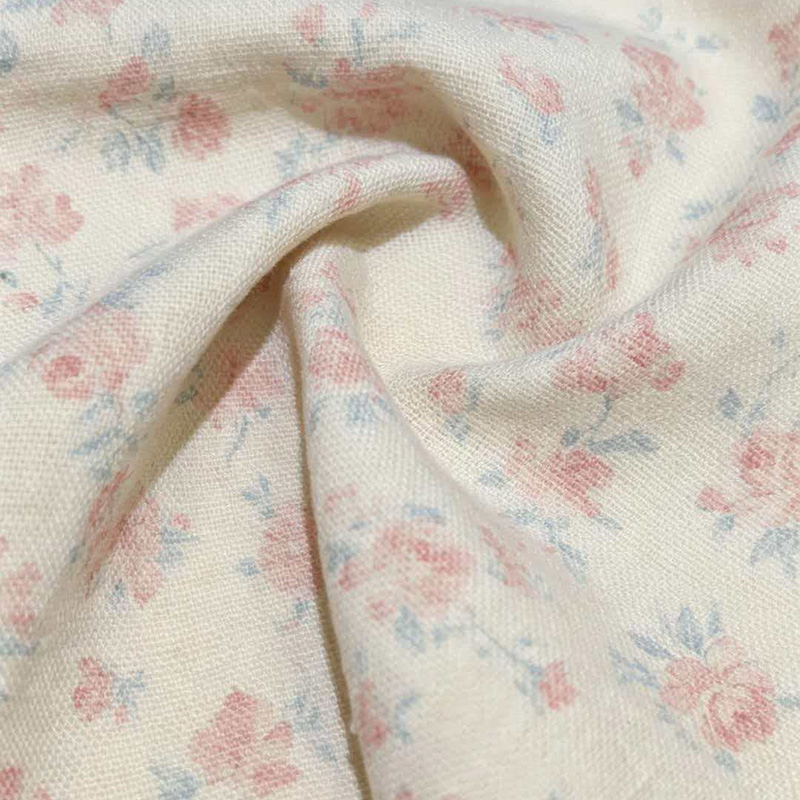
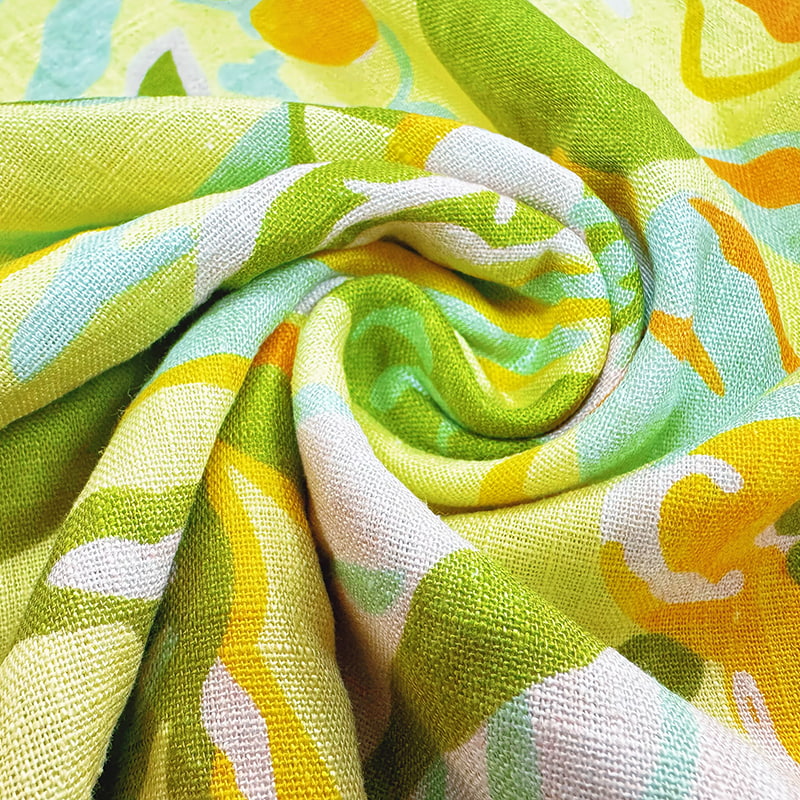
Reactive printing bonds chemically with cellulose fibres, so it works beautifully on cotton-rich blends where the cotton is doing most of the visual work. The colour depth and wash fastness are excellent, and the hand feel stays soft. The trade-off is that the polyester share does not take reactive dye in the same way, so extremely saturated shades may lean slightly lighter than a 100 percent cotton result. For applications where this matters, exploring a breathable cotton reactive printing fabric gives a useful baseline for comparison.
Sublimation inks only bond with polyester, which means on an 80/20 base only about one-fifth of the surface will truly accept the ink. That makes sublimation a poor fit for heavy cotton blends, but an outstanding fit for polyester-dominant or polyester-rich constructions. When a project calls for a crisp, high-definition print with excellent wash fastness and a slightly crisper hand, the sublimation route is usually the right call.
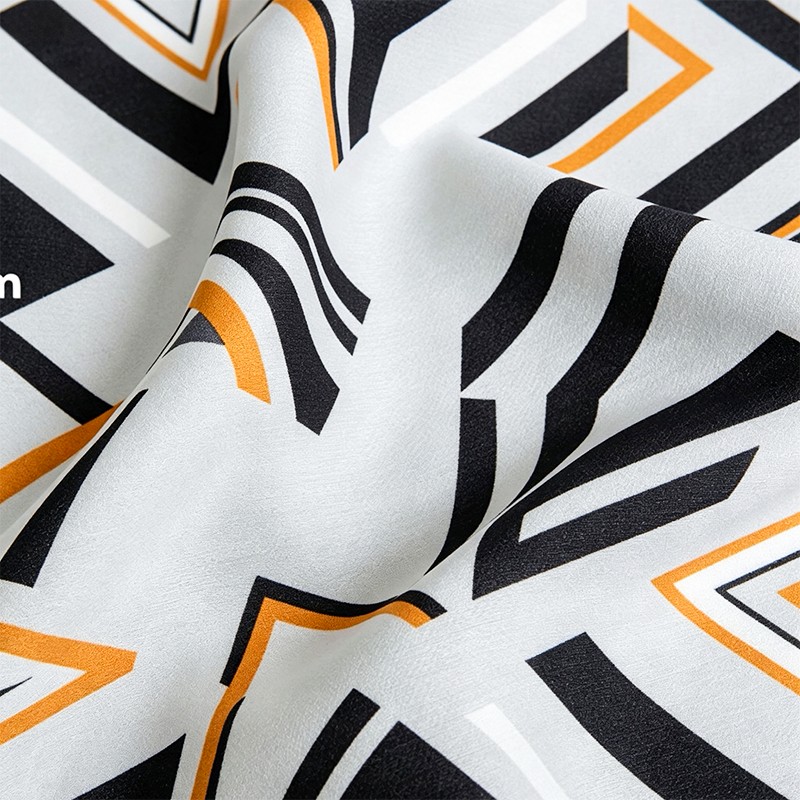
 Lightweight and Durable Polyester Cotton Digital Sublimation Printing FabricThis product is made of high-quality/recycled polyester fiber, which achieves the printing effect of bright and saturated patterns and clear details through high-heat ...View Product →
For projects where the polyester share is high enough to carry a sublimation print, a lightweight and durable polyester-cotton digital sublimation printing fabric gives an excellent balance of print sharpness, colour vibrancy and day-to-day durability.
Rather than asking whether 80/20 is good in the abstract, ask what your product needs to survive. The checklist below is the same one we walk through with clients before sampling begins.
Casual shirting, summer dresses, blouses, skirts and lightweight trousers all suit an 80/20 base. The fabric drapes softly, prints cleanly and holds shape through repeated wear. Garments destined for hot, humid climates especially benefit from the cotton-rich construction.
Cushion covers, table linens, lightweight curtains and upholstery accents benefit from the blend's wrinkle resistance and dimensional stability. Prints stay crisp, and the fabric resists the everyday abrasion that comes with soft furnishings.
This is a mixed picture. Low-intensity outdoor use such as camping apparel or garden workwear is fine, but high-sweat performance wear usually needs a technical synthetic instead. Match the fibre to the activity.
Tote bags, printed aprons, tea towels, notebook covers and promotional textiles are a natural fit for 80/20 because the cost structure works and the print quality stays high across large repeat orders.
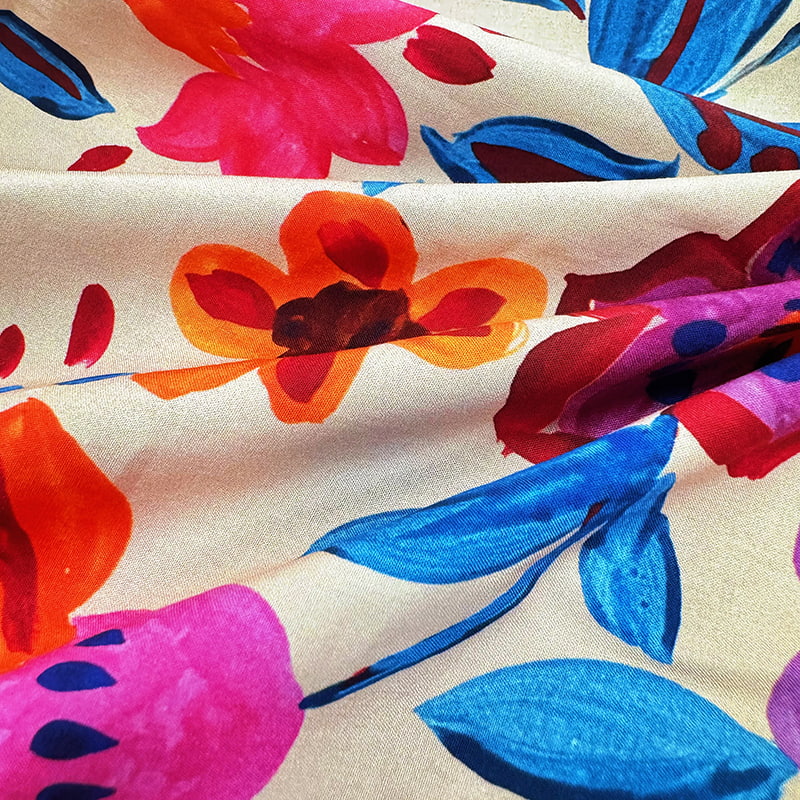
If your end product is a summer dress where drape and colour vibrancy are the deciding factors, it is worth reviewing a dedicated digital printed fabric for summer dresses as a benchmark before locking the specification.
 100% Cotton Plain Weave Fabric100% Cotton Plain Weave is a classic cotton fabric highly appreciated for its natural softness and skin-friendly feel. Woven using a plain weave, the yarns are tightly...View Product →
Where comfort and purity of fibre matter more than wrinkle resistance, a 100 percent cotton plain weave fabric offers the closest comparison point and shows clearly what the polyester share is contributing.
If you are about to place an order for 80/20 cotton-polyester printed fabric, work through these points with your supplier before the deposit goes out. Each one has cost us or our clients time at some stage.
None of these questions are unusual, and a competent mill will answer them without hesitation. Hesitation itself is useful information.
Less than pure cotton, but it can still shrink if the fabric has not been properly pre-shrunk or heat-set. A well-finished 80/20 typically shows shrinkage in the low single digits after three washes, compared with noticeably higher figures for untreated cotton.
Yes, for most casual summer garments. Because cotton dominates the blend, air still circulates through the fabric and moisture moves away from the skin reasonably well. It will not match pure cotton or linen in extreme heat, but it outperforms any polyester-dominant construction.
Absolutely. Digital inkjet printing handles gradients, fine detail and photographic imagery well on cotton-rich blends. The key is proper colour management at the prepress stage so that what you approve on screen matches what comes off the line.
It is a reasonable choice for duvet covers, pillow shells and mid-market sheet sets where wrinkle resistance and durability matter. For premium bedding where breathability and hand feel are the priority, pure cotton or cotton-linen usually wins.
An 80/20 base generally prints with richer, softer colour because more of the surface is cotton. A 65/35 or 50/50 construction will resist wrinkling more effectively but tends to produce a slightly flatter, more synthetic-looking print result.
The 80/20 cotton-polyester blend has survived decades of fibre innovation because it solves a real problem: it makes cotton behave a little better and cost a little less without giving up the qualities people actually like about cotton. That is not a marketing claim, it is a structural fact of how the two fibres interact inside a single yarn.
Where developments are heading is more interesting than the blend itself. We are seeing growing demand for recycled polyester content in cotton-rich blends, for lower-water reactive and digital printing routes, and for traceable fibre sourcing that can be documented from bale to finished roll. Brands are asking harder questions about where their polyester comes from and how the print was fixed, and mills that can answer those questions clearly are the ones winning the next round of programmes.
If you are developing a range and want to test how an 80/20 cotton-polyester base behaves with your artwork, the most efficient path is a short digital run: order a strike-off, wash it, wear it, and judge it against your actual product rather than against a specification sheet. That single step resolves more uncertainty than any amount of discussion, and it is usually where the real answer to "is this blend good?" finally becomes clear.
 Wholesale Digital Printed Fabric Manufacturers
 English
 中文简体
 Español
 عربى