Understanding the Fundamentals of Digital Sublimation Printing Fabric
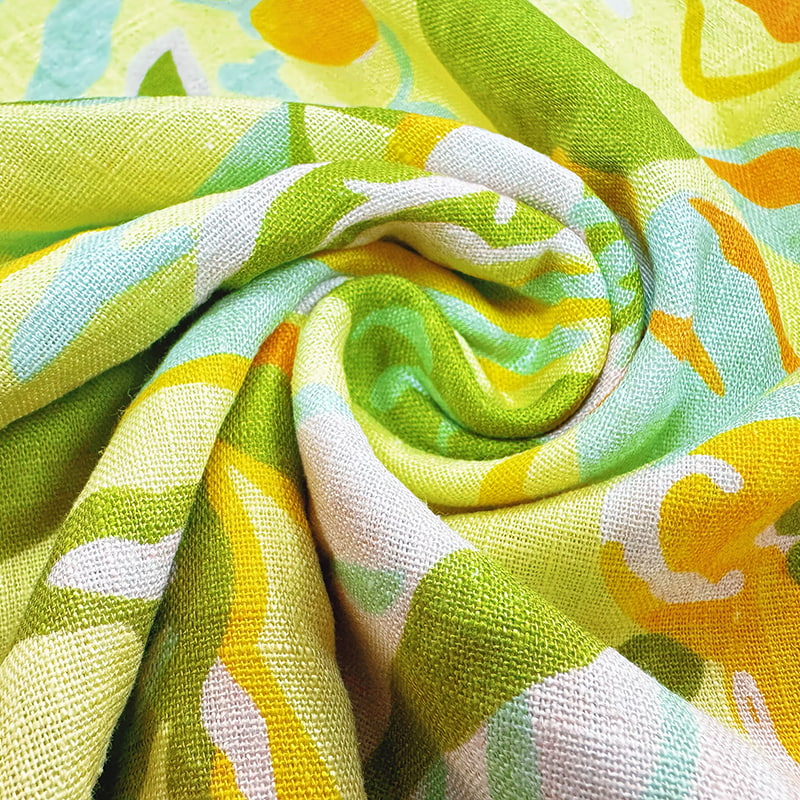
Digital sublimation printing fabric has transformed how modern textiles achieve high-definition visual precision. At its core, this technology relies on a sophisticated heat-activated process where specialized dispersed dye inks are converted from a solid state directly into a gas, bypassing the liquid phase entirely. When these gaseous dyes come into contact with synthetic fibers—most notably polyester—they penetrate the fiber structure at a molecular level. As the material cools, the fibers lock the pigment within, resulting in a bond that is fundamentally integrated into the substrate rather than sitting as a layer on the surface.
This molecular-level bonding is what provides digital sublimation printing fabric with its characteristic durability. Unlike traditional surface-level screen printing, which can crack or peel over time, sublimated designs remain vibrant, soft to the touch, and fully breathable. For those requiring textiles that retain color depth after repeated wash cycles or intense UV exposure, this process offers a level of permanence that other printing methods struggle to match.
At ShaoxingRuiyin Textile Co., Ltd., we have refined this technology through a comprehensive, modern production framework. By integrating design research, advanced digital printing, and specialized finishing processes, we provide a one-stop fabric solution. We understand that the final performance of a textile product begins with the synergy between the base fabric and the printing process. Whether developing high-performance athletic wear or intricate home decor pieces, we utilize our integrated service chain—starting from professional ICC color management and extending through to final quality inspection—to ensure that the digital design translates flawlessly onto the chosen substrate.
Essential Material Grades and Technical Specifications
Selecting the right foundation is critical, as not all synthetic materials respond identically to high-temperature ink transfer. Industrial projects demand strict consistency, which is why understanding the relationship between weight (GSM), weave, and fiber composition is essential for maintaining production standards.
When evaluating digital sublimation printing fabric for large-scale operations, technicians look closely at several measurable performance metrics. Below is a detailed parameter comparison of typical material grades utilized across various manufacturing sectors:
| Material Grade |
Weight Range (GSM) |
Fiber Composition |
Primary Performance Metric |
Ideal End-Use Environment |
| Standard Knit |
90 – 130 GSM |
100% Polyester |
High ink transfer clarity, smooth surface |
Lightweight flags, promotional banners, and soft signage |
| Interlock Stretch |
140 – 190 GSM |
Polyester / Spandex Blend |
Two-way mechanical stretch, excellent recovery |
Activewear jerseys, athletic shirts, and team uniforms |
| Micro-Mesh |
100 – 150 GSM |
100% Textured Polyester |
Maximum breathability, low airflow resistance |
High-intensity training wear and specialized sportswear linings |
| Heavy Twill / Oxford |
220 – 320 GSM |
100% High-Denier Polyester |
Superior tensile strength, abrasion resistance |
Durable outdoor gear, heavy-duty upholstery, and structured displays |
Maintaining uniform performance across these different grades requires meticulous oversight of the underlying physical properties. Variations in yarn tension, surface finishing, and thermal shrinkage can directly impact how the dispersed dye inks settle during the heat fixation stage. At ShaoxingRuiyin Textile Co., Ltd., we address these technical variables through an integrated approach to material engineering and quality assurance. As a modern technology enterprise specializing in high-end, personalized, and functional fabric printing, we combine design R&D with advanced finishing processes to ensure every batch of digital sublimation printing fabric meets strict dimensional stability thresholds.
Through professional ICC color management and rapid digital proofing, we eliminate discrepancies between initial color design files and the physical textile roll. Whether a project calls for the lightweight breathability of a specialized mesh or the robust tear resistance of a heavy-duty woven structure, our comprehensive suite of printing techniques—ranging from standard digital applications to functional surface treatments—ensures that the material performs reliably under real-world conditions. By pairing rigorous laboratory testing with flexible production scales ranging from tens of meters for prototype testing to tens of thousands of meters for full-scale manufacturing runs, we provide a stable, reliable foundation for any industrial textile program.
Industrial Applications and Strategic End-Use Integration
The versatility of digital sublimation printing fabric makes it an indispensable asset across a wide spectrum of commercial and industrial sectors. Because the ink bonds directly with synthetic fibers at a molecular level, the resulting textiles withstand rigorous daily use, frequent washing, and harsh environmental exposure without degrading in visual quality or structural integrity.
Different industries place distinct technical demands on textile substrates. Below is a breakdown of how specific material parameters align with major end-use sectors:
| Industrial Sector |
Core Performance Requirement |
Recommended Fabric Structure |
Typical Technical Specification |
| Sportswear & Athletic Apparel |
Moisture management, dynamic stretch, high breathability |
Interlock or Micro-Mesh knit |
140–200 GSM with multi-directional mechanical recovery |
| Visual Communications & Signage |
Deep color saturation, UV resistance, minimal edge curling |
Tight-weave Polyester Flat Knit |
90–130 GSM with flame-retardant post-treatment |
| Home Interiors & Upholstery |
High abrasion resistance, wash durability, color permanence |
Heavy Twill or Structured Oxford |
220–320 GSM with high tensile strength ratings |
| Outdoor & Cultural Goods |
Weatherproofing, tear resistance, long-term exposure stability |
Coated Polyester / Blend variants |
180–260 GSM with specialized water-repellent finishing |
Translating these raw material specifications into finished market-ready products requires deep cross-industry expertise. At ShaoxingRuiyin Textile Co., Ltd., our operations span the fashion, home decoration, outdoor and sports, and cultural and gift industries, allowing us to bridge the gap between technical textile performance and aesthetic design. We recognize that an outdoor banner has completely different functional tolerances than a high-end athletic jersey.
To support these diverse applications, our facility integrates traditional printing, advanced digital printing, and specialized functional finishing under one roof. Whether a client requires moisture-wicking finishes for activewear or specialized flame-retardant treatments for architectural soft signage, our team provides comprehensive fabric consultation services. By evaluating the final application environment upfront, we recommend the optimal base composition and printing technique from the start, ensuring that every meter of digital sublimation printing fabric performs reliably in its designated commercial setting.
Precision Manufacturing and Rigorous Quality Assurance
The transition from a digital design file to a finished textile roll involves a sequence of highly controlled factory operations. Achieving consistent output with digital sublimation printing fabric requires precise synchronization between temperature, pressure, and dwell time during the heat fixation stage. If thermal parameters fluctuate even slightly, color saturation and ink penetration depth can vary across the roll, leading to noticeable inconsistencies in large production runs.
Modern textile production relies on strict mechanical tolerances and standardized calibration metrics to eliminate these variables. Below is an overview of the primary operational benchmarks managed during the manufacturing and quality control cycle:
| Production Stage |
Control Parameter |
Target Standard / Tolerance |
Purpose in Quality Assurance |
| Base Preparation |
Surface Tension & pH |
Neutral pH (6.0–7.5), low surface tension |
Ensures uniform ink absorption and prevents bleeding |
| Color Calibration |
ICC Profile Matching |
Delta E variance threshold below 1.0 |
Guarantees exact color fidelity between screen proofs and final fabric |
| Thermal Fixation |
Calender Temperature |
200 to 210 degrees Celsius (plus or minus 2 degrees Celsius) |
Achieves complete gasification and molecular bonding of dispersed dyes |
| Dimensional Stability |
Heat Shrinkage Rate |
Below 3 percent length and width distortion |
Prevents post-washing distortion in finished garments or displays |
Maintaining these tight tolerances is a core focus at ShaoxingRuiyin Textile Co., Ltd., where we operate as a modern technology enterprise dedicated to high-end, personalized, and functional fabric printing. Our factory floor integrates the entire production chain—combining design research and development, digital and traditional printing methods, and specialized post-print finishing processes into a seamless workflow.
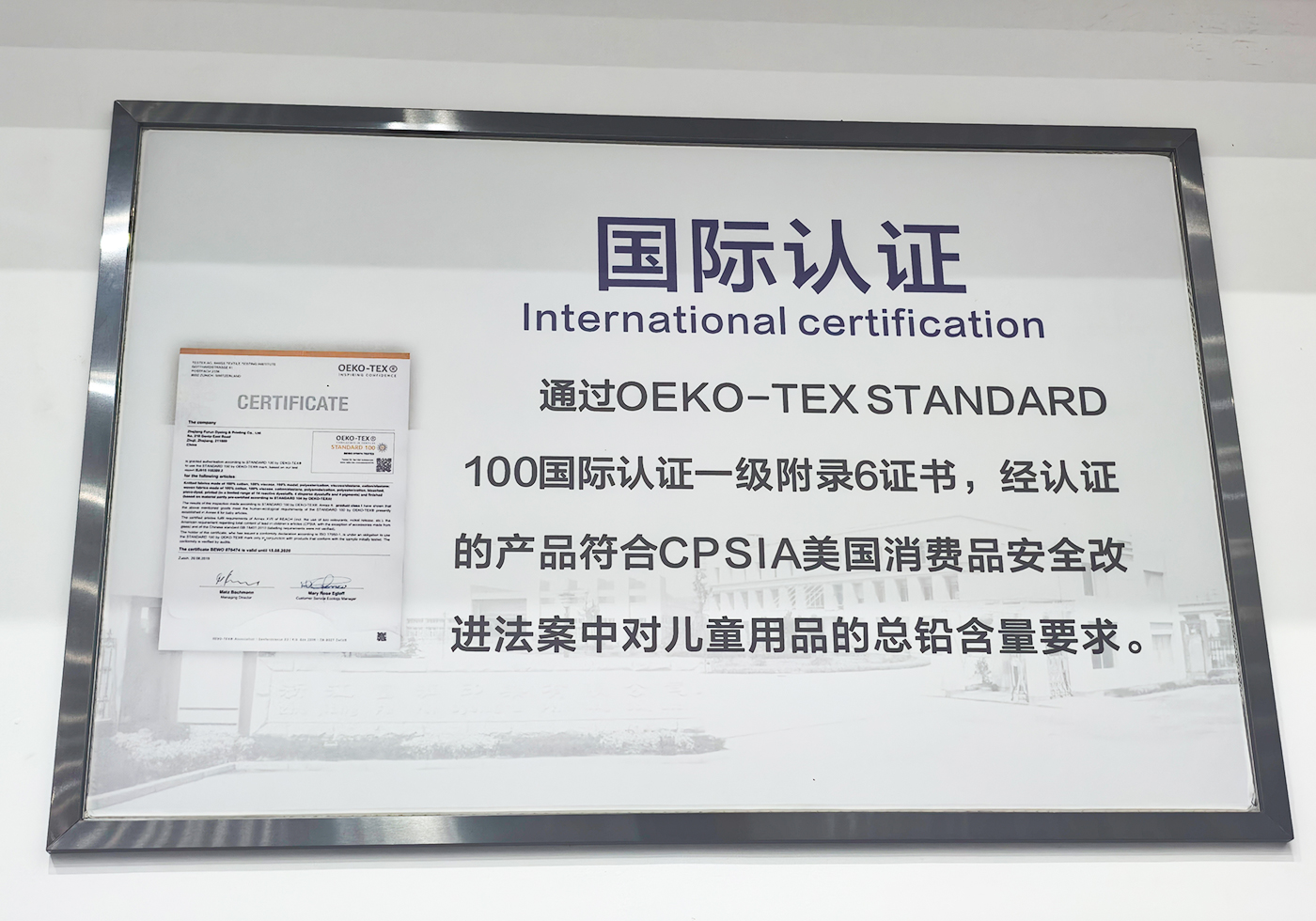
To safeguard product integrity, we implement a full-process service chain that enforces strict quality inspection standards from raw material intake to final roll packaging. Professional ICC color management is applied at the outset to ensure that digital proofs match the physical print with high consistency. Furthermore, our utilization of eco-friendly, high-strength dyes and inks complies with international environmental benchmarks such as Oeko-Tex Standard 100, ensuring that every meter of digital sublimation printing fabric is safe, durable, and chemically stable. By coupling continuous technical innovation with rigorous, multi-stage testing, we maintain reliable production standards whether handling short prototyping runs or tens of thousands of meters for large-scale distribution.
Advanced Customization Capabilities for Specialized Textile Requirements
Standard textile grades serve many general applications, but specialized commercial projects frequently demand tailored specifications. Whether an engineering team requires a specific weight, a non-standard roll width, or a specialized functional coating, adapting the digital sublimation printing fabric to meet unique performance criteria is critical for project success.
Customization involves modifying physical and chemical properties during the yarn extrusion, weaving, and finishing stages. Below is an overview of standard baseline parameters versus custom-engineered adjustments typically requested for specialized industrial applications:
| Customization Parameter |
Standard Baseline Specification |
Custom-Engineered Alternative |
Primary Functional Benefit |
| Fabric Weight (GSM) |
90 to 200 GSM |
60 to 350 GSM |
Tailor drape, structural rigidity, or opacity |
| Surface Treatment |
Untreated / Standard finish |
Anti-UV, Flame-Retardant, Waterproof |
Enhances environmental durability and safety compliance |
| Roll Dimensions |
Width: 150 cm / Length: 100m |
Width up to 320 cm / Custom lengths |
Minimizes waste in large-scale cutting and wide-format printing |
| Elasticity Profile |
Rigid or 2-way stretch |
4-way mechanical stretch |
Maximizes ergonomic comfort in high-mobility apparel |
Translating these specialized requirements into physical textile products requires an agile, well-equipped production partner. At ShaoxingRuiyin Textile Co., Ltd., we operate as a modern technology enterprise specializing in high-end, personalized, and functional fabric printing, making customization a central part of our daily operations. Because we integrate design R&D, digital and traditional printing, and comprehensive finishing processes under one roof, we can easily transition from standard catalogs to bespoke material development.
Our full-process service chain is structured to support these exact needs. Through professional fabric consultation services, our technical team collaborates closely with clients to analyze the end-use environment, recommend the most suitable base fibers—such as polyester, nylon, or specialized blends—and apply precise functional treatments. Furthermore, our flexible production capabilities allow us to handle rapid proofing and small-scale custom orders of just tens of meters for prototype evaluation, right through to tens of thousands of meters for mass production. This flexibility ensures that every batch of digital sublimation printing fabric is precisely calibrated to meet your exact design, performance, and compliance goals without sacrificing supply chain efficiency.
Logistics, Packaging, and Global Supply Reliability
The physical journey of a textile roll from the factory floor to its final destination requires meticulous handling to prevent damage, contamination, or moisture absorption. High-grade digital sublimation printing fabric is particularly sensitive to improper environmental conditions during international transit; exposure to excessive humidity can compromise the integrity of the core tubes or alter the fabric's surface tension before it reaches the printing press.
To ensure materials arrive in pristine condition, export-grade packaging follows strict multi-layer protective standards. Below is an overview of the typical packaging and logistics parameters utilized for securing bulk textile shipments:
| Logistics & Packaging Phase |
Standard Specification |
Export-Grade Protection Standard |
Purpose in Supply Chain Integrity |
| Inner Core Material |
Standard cardboard tube |
Heavy-duty reinforced paper or plastic core |
Prevents roll crushing and center deformation under heavy stacking |
| Moisture Barrier |
Single poly bag |
Sealed waterproof polyethylene film with desiccants |
Protects against humidity fluctuations and condensation during ocean freight |
| Outer Protection |
Woven bag or light plastic wrap |
Multi-layer kraft paper wrapping with edge guards |
Shields against friction, tears, and impact damage during transit |
| Palletization |
Loose stacking |
Fumigation-free wooden pallets, shrink-wrapped |
Optimizes container loading efficiency and mechanical forklift handling |
Maintaining this level of logistical precision requires a synchronized supply chain that anticipates transit timelines and inventory cycles. At ShaoxingRuiyin Textile Co., Ltd., we understand that reliable delivery is just as critical as raw material quality. Operating as a comprehensive technology enterprise, our service chain extends far beyond the printing press to include rigorous post-production quality control and structured export logistics.
We maintain a rapid-response manufacturing model designed to support fast-paced global markets, ensuring that production schedules align seamlessly with shipping windows. Whether coordinating container loads for multi-thousand-meter orders or managing expedited shipments for time-sensitive projects, our team ensures proper export documentation and secure transit protocols are met every step of the way. By bridging advanced textile manufacturing with dependable supply chain execution, we provide a stable, end-to-end partnership for all your digital sublimation printing fabric requirements.
Expert Insights: Answers to Common Technical and Procurement Questions
Navigating the technical details and supply logistics of advanced textiles often raises specific questions regarding material compatibility, production scaling, and quality consistency. Below are answers to some of the most frequent technical inquiries related to digital sublimation printing fabric:
What are the minimum volume requirements for ordering custom-engineered digital sublimation printing fabric?
Production flexibility is essential for both prototype development and mass manufacturing. We accommodate a wide range of order scales, starting from tens of meters for rapid proofing and sample evaluation, up to tens of thousands of meters for large-scale commercial production. This adaptability ensures that design teams can test material performance before committing to massive output volumes.
How is consistent color accuracy maintained across extensive production runs and varying dye lots?
Color fidelity is managed through professional ICC color correction protocols. By standardizing the digital design files, proofing equipment, and final heat-press calibration, we ensure that screen designs match the physical textile output with high consistency. Additionally, our rigorous quality inspection standards monitor every stage from raw material intake to final finishing, minimizing batch-to-batch color drift.
What are the standard packaging and shipping configurations designed for protecting fabric integrity during international transit?
To prevent moisture absorption, creasing, or physical damage during global shipping, export-grade rolls are wound onto reinforced core tubes, sealed within waterproof polyethylene films with desiccants, and wrapped in multi-layer kraft paper. For containerized transport, materials are securely palletized using fumigation-free wooden pallets and shrink-wrapped to withstand long-distance maritime or air freight.
What is the process for requesting technical data sheets and physical sample swatches to conduct compatibility testing before initiating full-scale production?
The process begins with our comprehensive fabric consultation service. By evaluating your intended end-use environment—whether activewear, soft signage, or interior decor—our technical team recommends the most suitable base fibers and functional treatments. Clients can then request rapid digital proofs and physical sample swatches to test ink transfer efficiency, wash durability, and tactile characteristics prior to placing a full production order.
 English
 中文简体
中文简体 Español
 عربى
عربى