2026.10.20
 Industry News
Content
When a new collection needs a fabric base, the first decision our customers usually ask about is 100% cotton or 100% polyester. Every dyehouse and print studio has a favorite, but the answer depends on your end product, your printing method, and the experience you want your end consumer to have. As a customized printed fabric factory, we handle both fibers daily through digital inkjet printing, reactive printing, and sublimation printing, so we want to share the comparisons that actually matter for product development.
Cotton is a natural cellulose fiber grown in warm climates. Its hollow, ribbon-like structure absorbs moisture easily, feels soft against the skin, and takes dyes well. Polyester is a petroleum-based synthetic fiber built from polymer chains. It is extrusion-spun into continuous filaments, which can be textured or cut to mimic natural fibers. This fundamental difference affects every property decision.
At a print factory, the raw fiber structure determines how ink lands on the fabric. Cotton has a high surface energy and excellent absorbency, which allows water-based reactive or pigment inks to penetrate the fiber core. Polyester has a smooth, hydrophobic surface and requires dispersion dyes that bond under heat, usually through sublimation transfer. Understanding this from the start prevents sampling surprises later in development.
The table below summarizes the most common performance differences between 100% cotton and 100% polyester in printed textiles. These are general characteristics, not absolute rules, because yarn count, weave structure, and finishing can alter the final feel.
| Property | 100% Cotton | 100% Polyester |
|---|---|---|
| Breathability | High | Low to medium |
| Moisture absorbency | High | Very low |
| Moisture wicking | Poor | High |
| Softness | Soft, natural | Smooth or textured |
| Durability | Good, but ages with washing | Excellent, strong and resilient |
| Wrinkle resistance | Low | High |
| Color vibrancy | Deep, matte | Bright, high-energy |
| Print method | Reactive / pigment / inkjet | Sublimation / dispersion |
| Shrinkage | Can shrink | Minimal |
| UV resistance | Moderate | High, but can yellow |
This is only a starting point. The weave density, yarn twist, and finishing chemicals can shift these properties significantly, so testing remains essential. The bar chart below gives a visual impression of how the two fibers compare across key buying criteria; the values are indicative ratings based on our production experience.
Cotton absorbs up to one quarter of its weight in water before feeling wet. This makes it comfortable for low-activity clothing, soft bedding, and casual dresses. However, a wet cotton garment can stay damp, become heavy, and cling to the skin. In hot humid environments, it can take a long time to dry.
Polyester is hydrophobic. It does not absorb moisture into the fiber, but it wicks water along the fiber surface through capillary action. Sweat moves away from the skin and spreads out to evaporate quickly. That is why athletic wear, outdoor gear, and performance uniforms favor polyester.
For a printed fabric buyer, this difference affects garment use and consumer feedback. A 100% cotton sundress with colorful inkjet prints feels pleasant and calming, while a 100% polyester activewear top with sublimation graphics dries fast and keeps the athlete comfortable during an intense workout. Neither is better in isolation; the question is what activity your customer will be doing.
Breathability is a measure of how much air passes through a fabric. Cotton's natural fiber structure creates more space for air circulation, so it keeps the skin cooler in still, warm conditions. Polyester yarns can be tightly woven or knitted, which restricts airflow, but modern texturizing and knit structures can create surprisingly airy polyester fabrics.
The two fibers also differ in temperature regulation. Cotton helps the body stay dry by absorbing perspiration, but once soaked, it loses its insulation and can make the wearer feel cold. Polyester maintains a stable layer of air against the skin and dries quickly after rain or sweat, which is why it works well for baselayers in changeable weather.
Indicative comfort response during increasing physical activity: cotton keeps a soft, moderate feel, while polyester moves heat away faster but can feel less natural at rest.
Durability in printed textiles is about more than abrasion resistance. It includes resistance to repeated washing, sunlight, stretching, and pilling. Polyester is generally stronger than cotton in tensile strength, recovers its shape after stretching, and resists shrinking. It is also less likely to be damaged by mold or mildew. For products that take heavy daily use, such as workwear, bags, or outdoor furniture covers, a 100% polyester base is often the safer engineering choice.
Cotton fabric can be very strong when woven tightly, but its strength drops when wet, and it gradually weakens from regular laundering. Over many wash cycles, cotton softens and loses its crisp finish, which can be a positive or a negative depending on the product. For a linen-feel dress or a worn-in shirt, that aged softness is attractive. For a structure-heavy curtain or a frequently washed uniform, polyester will last longer.
As a printing factory, we also see durability differences in the print itself. Sublimation prints on polyester go below the fiber surface, so they rarely fade with washing. Surface pigments on cotton can fade more quickly unless treated with fixation or bound with a reactive dye. If your customer expects a high number of industrial laundry cycles, polyester plus sublimation offers the best long-term appearance.
Care labels are part of the product experience. Cotton tolerates high wash temperatures, but it shrinks if not pre-shrunk or properly finished. It also wrinkles, which may require ironing after washing. That is acceptable for bedding and denim but can be a drawback for travel apparel or uniforms.
Polyester is easy care: it resists wrinkles, dries quickly, and needs no ironing. However, it is sensitive to high heat. Left in a hot dryer or pressed with an over-hot iron, polyester can melt, become shiny, or develop permanent creases. It also tends to pick up oil-based stains and can retain body odor if not washed promptly.
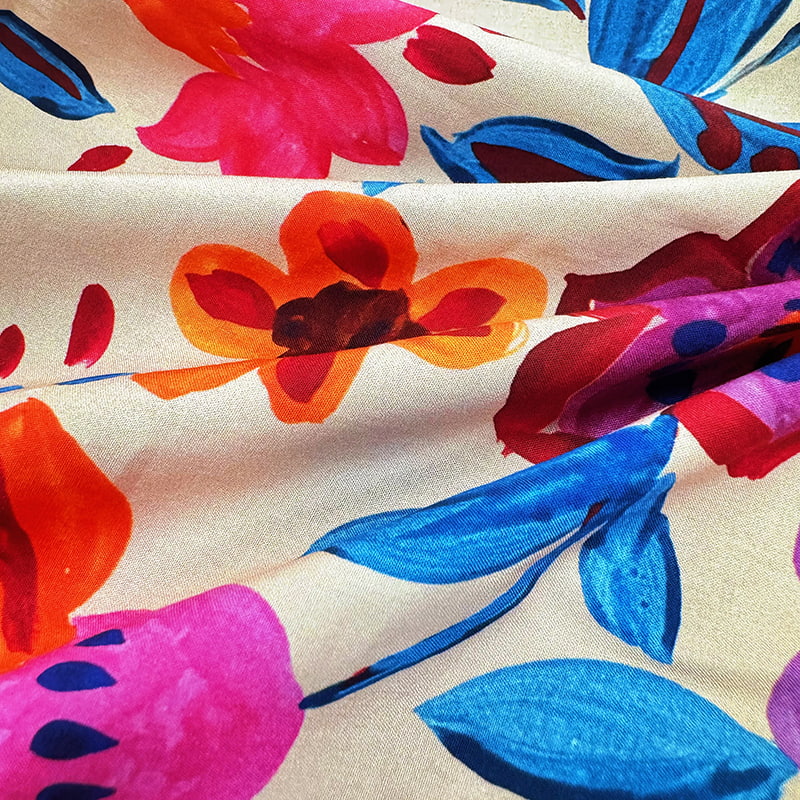
Print quality is where fiber selection becomes most complex for a factory. Cotton absorbs ink and creates a slightly matte, rich color that looks more organic. Because the fiber is absorbent, fine details can appear softer, and colors can merge gently like watercolor. This is a beautiful effect for floral dresses, vintage prints, and bohemian textiles.
Polyester accepts dye only in a gaseous or dissolved state at high temperature, so the common route is sublimation transfer. The colors are extremely sharp, saturated, and glossy. Fine lines, gradients, and photorealistic images appear crisp because the dye remains on the surface layer of the filament. The printed area also retains a smooth hand feel, which is why polyester is so popular for sportswear and fashion items with bold graphics.
We see a steady demand for cotton prints in home textiles and dresses, where a natural, quiet color is valued. We also see a growing request for polyester prints in loungewear and accessories where customers want vibrant, Instagram-ready recolor options. When a brand asks us for very high resolution details, we often recommend a fine polyester or a high-twist crepe; when they want a soft, breathable finish with classic depth, cotton becomes the default.
Your chosen fiber dictates your printing process. Cotton can be printed with reactive dyes, pigment inks, or acid-type chemicals only after cationization in some cases. Reactive printing is the traditional method for long-lasting cotton prints because the dye forms a chemical bond with the cellulose fiber. Digital inkjet printing on cotton has improved enormously, allowing shorter runs and faster sampling without sacrificing color depth.
Polyester relies on dispersion dyes. The standard method is digital sublimation transfer: print the design on a transfer paper, then apply heat and pressure to move the dye gas into the polyester yarns. The result is permanent, vibrant, and comfortable to wear if the fabric has been constructed with enough airflow.
Choosing the wrong combination creates defects. Printing a cotton-reactive design on untreated polyester will wash out. Printing a sublimation transfer on cotton leaves a ghost image and low wash fastness. For this reason, a responsible fabric supplier should always guide you toward the correct base for your chosen print method. Our complete guide to reactive printing fabric explains the chemistry in more detail for buyers who want to go deeper.
Digital inkjet printing is now our fastest-growing service because it supports both cotton and polyester without engraved screens. It gives brands the freedom to test multiple colorways in small rolls before committing to bulk production. Whether you choose a natural cotton canvas for an artist-led capsule or a smooth polyester crepe for a high-shine collection, digital workflows reduce sampling time and waste.
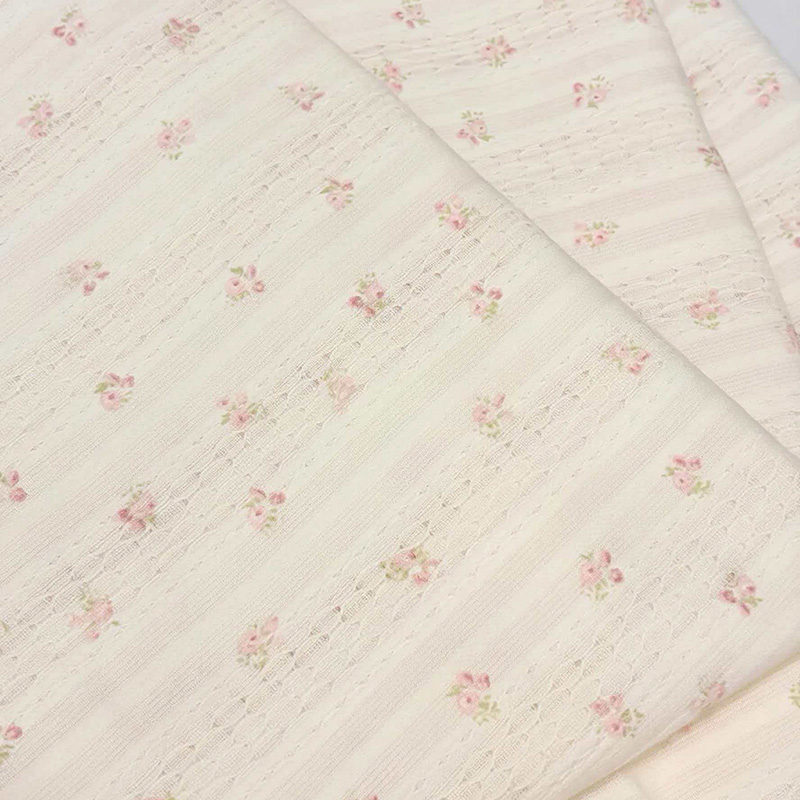
Cotton is not a single fabric. It can be woven as a lightweight voile, a crisp poplin, a sturdy twill, or a textured jacquard. For digital inkjet printing, we work with 100% cotton plain weave, twill, and jacquard-cutwork constructions. Each one gives your artwork a different base: plain weave gives an even, smooth surface for all-over patterns; twill adds a subtle diagonal texture; jacquard provides a dimensional background that highlights the print.
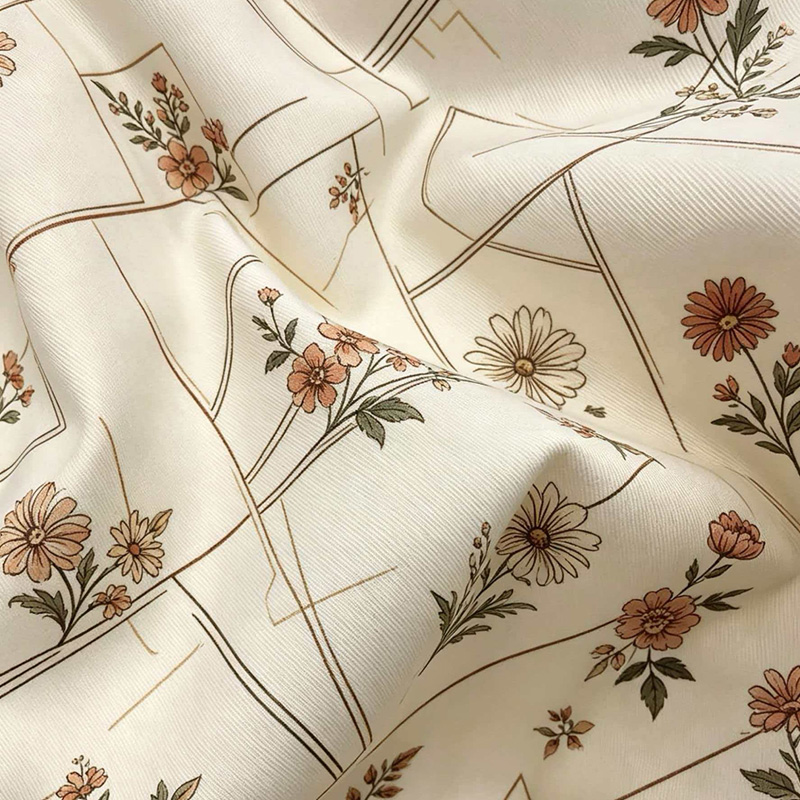
For brands that sell to fashion, home, or children's wear, cotton reactive printing is a classic choice. It feels breathable, launders well, and passes common skin safety tests. Many of our customers request a softener treatment or a natural-look finish to give the printed cotton a lived-in feel.
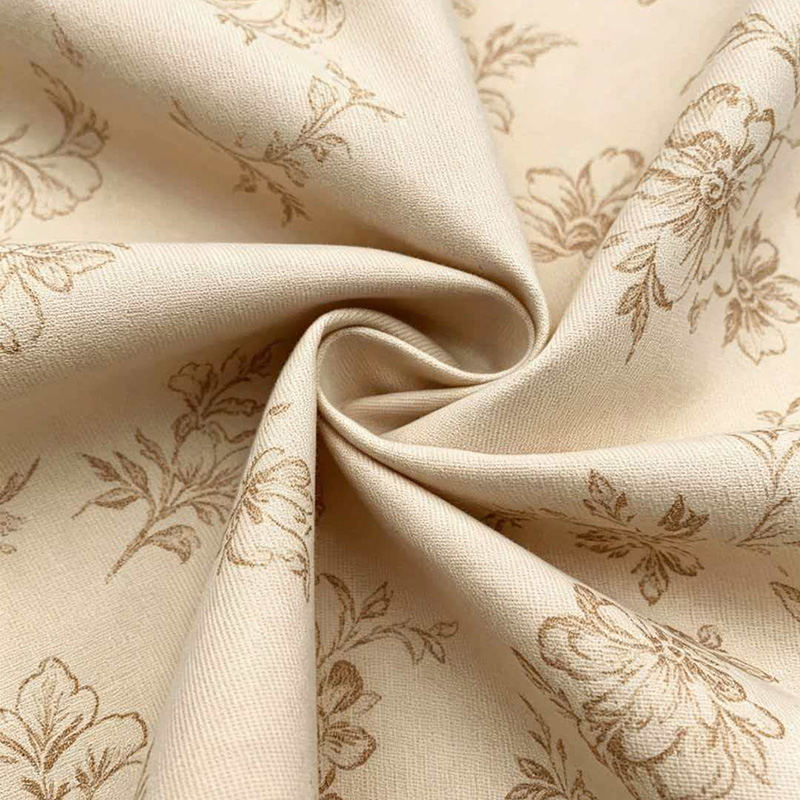
 100% Cotton Twill for Structured Printed GarmentsThis cotton twill offers a distinct diagonal texture, soft sheen, and reliable print hold. Ideal for shirts, dresses, and light jackets, with optional wrinkle-resistant finish.View Product →
If you are designing garments that need some structure, such as shirts, dresses, or light jackets, a 100% cotton twill is a reliable partner. It holds the print beautifully, resists pilling, and gives the wearer a sense of quality that blends can sometimes miss. We can also apply a wrinkle-resistant finish to improve care performance without changing the natural hand feel.
Polyester fabrics cover an equally wide spectrum: smooth satin, matt crepe, fine knit mesh, and high-twist crinkled surfaces. For digital printing, we often recommend a high-twist polyester crepe for blouses and dresses. The twisted yarns give a rich texture, and the fabric breathes through the micro-crinkles even though the fiber itself is synthetic.
For performance wear, a lightweight polyester or a polyester that has been texturized with air pockets can make sublimation prints feel softer and more flexible. In our factory, we test each polyester base for sublimation color yield and dimensional stability before offering it to customers, because not all polyester is created equal.
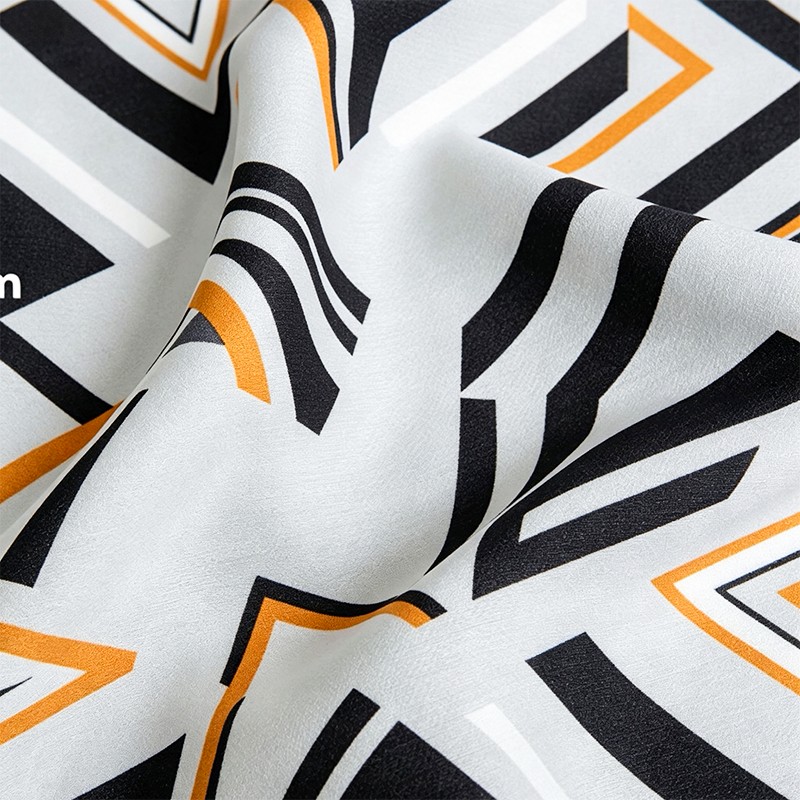 Crepe Polyester Fabric for High-End Summer ApparelThis lightweight polyester features a subtle crinkle texture, matte surface, and good drape. Sublimation prints come out clear, and it resists wrinkles for travel-friendly fashion.View Product →
The crepe polyester fabric we use for high-end printed garments is a good example of how polyester has moved beyond sporty looks. It has a matte surface, a slightly dry touch, and enough drape to make kimono silhouettes or tiered skirts beautiful. Sublimation prints on this base become exceptionally clear, and the fabric resists wrinkles, making it a practical option for travel fashion and seasonal collections.
Sometimes the best answer is not 100% cotton or 100% polyester but a thoughtful blend. Cotton-polyester blends combine the breathability and softness of cotton with the durability and quick-drying ability of polyester. A 65/35 or 50/50 blend can be engineered for both, though the print method must be adjusted depending on the dominant fiber.
Beyond cotton-polyester, our product range includes linen, ramie, viscose, nylon, and blends with Tencel or elastic. For example, a nylon-viscose blend gives the drape of viscose and the strength of nylon, making it a favorite for designer dresses and accessories. These fabrics are more specialized, but they often solve the performance gaps that pure cotton or pure polyester cannot.
 Nylon-Viscose Blend for Flowing Dresses and AccessoriesThis blend pairs nylon's strength with viscose's softness and moisture absorption, giving a comfortable hand feel and neat silhouette. Suitable for spring and summer designs.View Product →
When a customer needs a subtle texture with a high-end feel, a rayon or viscose blend is a strong candidate. It drapes beautifully, takes dyes well, and can be printed with reactive or inkjet methods. If the end use is a floating summer dress or a flowing scarf, viscose-based blends may outperform cotton for fluidity while offering better breathability than polyester.
Price always matters, but the total cost includes more than the raw fiber price. Cotton prices fluctuate with agricultural seasons, weather events, and global supply chains. Polyester prices follow petrochemical markets and are historically more stable in the short term. However, polyester fabrics are often cheaper to produce, which is why so many value-oriented apparel programs use it.
In printing, cotton usually demands more careful pre-treatment and post-treatment, especially for reactive dyes. That can add labor and water costs. Sublimation printing on polyester is efficient for short runs because no separate pre-treatment step is necessary. For high-volume orders with bright colors, polyester is frequently the lower-cost route.
Cotton products can often be sold at a premium because they carry a natural, sustainable story and a softer hand feel. For a brand targeting a higher segment, the higher cost is manageable. For a brand competing on price with fast-moving designs, polyester gives better flexibility. Our factory can produce from dozens of meters to thousands of meters, so we see the cost difference from both sides; the final advice always depends on your positioning.
Sustainability is not a simple either-or. Cotton is renewable and biodegradable, but conventional farming consumes significant water and pesticides. Organic cotton reduces chemical use but is more expensive. Polyester is made from fossil fuels, does not biodegrade quickly, and sheds microplastics during washing. Yet recycled polyester, made from plastic bottles or textile waste, has become a practical way to reduce its carbon footprint.
For printed fabrics, the chemistry is also important. Reactive dyes on cotton bond chemically with the fiber, reducing dye waste when properly managed. Sublimation printing on polyester eliminates liquid effluent for dyeing, because the dye becomes gaseous. Digital printing in general reduces water consumption compared to screen printing, because it uses only the exact amount of ink needed.
At our facility, we follow tight color management and offer finishes that maximize wash fastness, so garments last longer and stay out of landfills. Customers who need verified compliance can request Oeko-Tex certification, and we can produce on fabrics carrying independently certified origins. The sustainable choice is not just the fiber; it is the whole chain, from fiber to printing to garment use.
The fiber comparison does not end with the base fabric. Finishing chemicals can change the way cotton or polyester performs. Cotton can be treated for wrinkle resistance, water repellency, or softness; polyester can be treated for anti-static, antibacterial, or moisture management properties. In many cases, a consumer's negative experience with a fabric can be corrected in the finishing stage.
A 100% cotton shirt with a natural crease-resistant finish feels much easier to care for. A 100% polyester dress with a wicking finish and a softener feels less clammy than untreated polyester. As a factory, we recommend finishing treatments based on the end use: children's wear needs low-odor, low-chemical finishes; outdoor wear needs robust water repellency; luxury fashion often keeps the finish as natural as possible.
We also use finishing to improve printing performance. Cotton may be treated with a reactive padding to increase color yield. Polyester can be heat-set to reduce shrinkage before sublimation. These steps are invisible to the end consumer but critical to the finished product, and they should be part of any fabric sourcing conversation.
Every industry has a dominant fiber preference, and understanding it helps you position your collection correctly. In the fashion industry, cotton and polyester both appear, but the choice follows the story of the piece. Natural, breathable cotton is beloved for casual shirts, summer dresses, and slow fashion. Polyester is preferred for evening wear, rainwear, and anything needing strong structure without weight.
For home decoration, cotton is a top choice for cushion covers, bedding, and curtains because it feels approachable and launders easily. Window panels and throw pillows with reactive printed motifs create a calm, organic atmosphere. Polyester, meanwhile, is strong and colorfast, making it perfect for decorative cushions and table linens that must survive frequent washing and sunlight.
In outdoor and sports, polyester dominates due to its quick-drying, tear-resistant, and sun-resistant properties. Hiking shirts, sports bags, and swimwear all benefit from a synthetic base. Cotton has a smaller but still important role in outdoor leisure, especially for casual camp shirts, towels, and accessories where a softer, natural touch is valued.
Cultural and creative products, such as scarves, totes, and gift items, often use cotton for its affinity with art prints and hand-feel. The same pattern printed on cotton canvas conveys craftsmanship, while a polyester scarf will be lighter and more resistant to creasing. Brand customers sometimes need both: a cotton canvas for an artisan market, and a high-sheen polyester for a modern product launch.
Choose cotton for breathable, natural-feeling fabrics and polyester for vivid color, wrinkle resistance, and fluid silhouettes. Blends can offer a balanced drape.
Use cotton for bedding, curtains, and cushion covers that wash frequently; choose polyester for bold indoor accents or areas with strong sunlight exposure.
Polyester wicks sweat, dries fast, and resists UV damage. Cotton is best for relaxed lifestyle pieces and lightweight summer cover-ups.
Cotton canvas and cotton twill give printed gifts a warm, handmade feel. Polyester is ideal for lightweight accessories and shiny, colorful lifestyle products.
To make the choice easier, we prepared four quick-reference cards based on the most common requirements we see in daily communication with clients. Each card reflects what matters most for a specific product direction.
100% cotton is the default. It feels gentle on skin, absorbs moisture, and pairs perfectly with reactive or digital prints for a relaxed aesthetic.
100% polyester delivers intense colors, strong dimensional stability, and fast drying. Best for activewear, outerwear, and colorful accessories.
A cotton-polyester blend reduces cost while keeping part of cotton's hand feel and part of polyester's wrinkle resistance. A safe middle path for mass production.
High-twist polyester crepe or silk-like viscose blends give a designer drape and sharp printing ability for limited collections.
No comparison chart can replace your own testing. We always recommend a sample run before a full production order. The sample should cover three areas: print quality, hand feel after washing, and physical durability. It allows you to see the color depth, the fade rate after the first few washes, and the shrink percentage with your own washing conditions.
When you request a sample from us, we ask three questions. What is the final product? What is the printing method or design complexity? What is the desired care label? These answers guide us to the right base and finish. Because our factory works with cotton, polyester, and many blends, we do not have a reason to push one fiber over another; we can recommend what really fits your product.
During sampling, we also check the fabric's response to sublimation or reactive dyeing. Cotton may require a softener; polyester may require a water-repellent treatment. These details appear only when you see and touch the finished sample. Relying on a supplier that offers flexible sampling will save you from costly production mistakes.
Digital printing has made cotton and polyester comparison more dynamic. A high-resolution digital inkjet printed fabric can now carry complex patterns on both fibers. The main difference is the ink system and the pre-treatment. On cotton, water-based reactive inks penetrate deeply; on polyester, dispersed dyes fuse with the yarn. Both can produce photographic detail when the base fabric is smooth and well-prepared.
High-resolution printing is especially important for brand clients who want a unique pattern or a licensed artwork. Cotton gives the art a painterly, decorative quality; polyester gives it a sharp graphic quality. Some brands choose both bases and use the same design across two product lines, letting the fiber define two different consumer personalities.
As digital press speeds rise, the cost gap between cotton and polyester printing shrinks. This changes which fiber is more economical for small runs. A century ago, cotton printing required heavy screens and high minimums; today, digital inkjet on cotton allows a start-up brand to order 500 meters and sell a capsule collection. Polyester printing is even more flexible, with some sublimation lines running without water or effluent removal.
The best way to choose between 100% cotton and 100% polyester is to share your end use with a supplier who understands the full printing chain. Tell them the style, the season, the wash care, and the target customer. This context matters because a cotton lawn that is perfect for a spring blouse may be too flimsy for a tote bag, and a polyester satin that looks elegant for an evening dress may trap heat for a summer shirt.
A professional supplier will also ask about your artwork deadline and run size. Digital printing can accommodate both very small and very large orders, but the optimal base may change with the quantity. For a quick proof of concept, a dense cotton or a smooth polyester are equally easy. For a long production season, the supply chain reliability of the fiber becomes important.
At our company, we see the best outcomes when the buyer shares a clear product brief. The brief does not have to be long; a simple sentence like "women's summer dresses with a floral digital print, machine wash cold, line dry" is enough. We then restrict the options to a few suitable bases and send pre-production samples. This collaborative approach saves weeks of trial and error, and it produces a final fabric that actually sells.
Now that you understand the core differences, the next step is simple. List the properties that are non-negotiable for your collection, such as breathability, color brilliance, durability, or shrinkage control. Then decide whether 100% cotton, 100% polyester, or a blend fits that list. A single fiber can still be the best answer if it matches the product story.
If your product needs an organic, breathable, and naturally soft feel, cotton is likely the right base. If your product needs quick drying, high color energy, and wrinkle resistance, polyester is likely the right base. And if you are uncertain, a blended or specialty fabric can give you a middle position. The important thing is to verify by testing before you go into mass production.
Our factory is ready to guide you through this choice. We offer digital inkjet, reactive, and sublimation printing on a wide range of fabrics, with flexible run sizes and experienced color management. Send us your artwork, tell us your end use, and we will recommend the fiber structure that gives you the best balance of appearance, performance, and cost.
 Wholesale Digital Printed Fabric Manufacturers
 English
 中文简体
 Español
 عربى