2026.09.29
 Industry News
Content
The question lands in every sourcing mailbox eventually: is 50 percent cotton and 50 percent polyester good? The honest answer is that it is genuinely excellent at a specific set of jobs and thoroughly ordinary at others, and the ratio printed on a specification sheet tells you far less than the yarn structure hiding behind it. When a mill labels a fabric 50/50, it usually means the yarn itself was spun from an intimate blend of equal parts cotton fibre and polyester fibre. That construction behaves very differently from a cloth woven with alternating cotton and polyester yarns, even though both are commonly described as cotton-poly blends. In an intimate blend the two fibres sit side by side inside every single thread, so the finished cloth inherits a real mixture of properties rather than a patchwork of stripes that separate the moment a seam is stressed. Buyers who order the same nominal ratio from two different mills and receive two completely different cloths are almost always looking at a difference in yarn architecture, not a difference in percentages.
The blend exists for reasons that are equal parts economic and practical. Cotton contributes breathability, moisture absorption, a soft natural hand, and a surface that takes reactive dyes with exceptional clarity. Polyester contributes tensile strength, abrasion resistance, colour retention, and a memory for shape that survives dozens of laundering cycles. Combine them in equal measure and the result costs less than good cotton, wears considerably longer than good cotton, and feels far more natural against the skin than an all-polyester ground. For uniform programmes, hospitality textiles, workwear, curtain panels and a long list of casual garments, that combination has proved remarkably difficult to beat when the calculation is cost per wear rather than cost per metre. The blend also behaves predictably at the cutting table, which matters more than most people admit. A 50/50 plain weave holds its grain, resists the skewing that plagues loose cotton constructions, and feeds through automated cutting equipment without the stretching that turns a clean marker into wasted yardage. That single property quietly saves factories more money each season than any negotiation over a few cents per metre.
Start with the strengths, because they explain why this blend has survived decades of fibre innovation and still sits in the specification books of major uniform and hospitality programmes. Durability comes first. Polyester resists abrasion, repeated flexing and pilling far better than cotton, so a 50/50 shirt, trouser or bed sheet outlasts a comparable pure cotton item by a wide margin in high-wear settings. Dimensional stability is the second structural advantage. The polyester fraction restricts shrinkage during laundering and drying, which keeps garment sizes consistent across a large workforce and prevents the slow creep of hem lines that ruins the appearance of cotton uniforms after twenty washes. Wrinkle recovery is the third. Polyester is thermoplastic, so the fabric springs back from creasing instead of holding it, and a garment that needs less ironing is a garment that survives a long shift looking presentable.
The weaknesses are equally well documented and worth taking seriously before committing to a production run. Breathability is the most frequent complaint. Cotton absorbs moisture and releases it gradually; polyester transports almost none of it. In a balanced weave the polyester fibres block part of the path that moisture would otherwise take, so the cloth can feel clammy against the skin in humid weather or during physical work. Hand feel is the second trade-off. Even with modern spinning and mercerising, a 50/50 ground rarely matches the softness of combed cotton or the fluid drape of viscose, and the difference becomes obvious the moment the fabric is cut into a garment that is meant to move. Surface pilling is the third. Because the two fibres wear at different rates, short cotton fibres work loose while polyester filaments stay anchored, producing small pills that are difficult to remove without damaging the cloth. Static build-up in dry conditions and a slightly muted colour response on deep shades round out the list of practical annoyances.
| Property | 100% Cotton | 50/50 Cotton Polyester | 65% Polyester 35% Cotton | 100% Polyester |
|---|---|---|---|---|
| Breathability | Excellent | Moderate | Below average | Poor |
| Softness against skin | Excellent | Good | Average | Fair |
| Wrinkle recovery | Poor | Good | Very good | Excellent |
| Shrinkage resistance | Low | Good | Very good | Excellent |
| Abrasion resistance | Moderate | Good | Very good | Excellent |
| Colour retention after washing | Good | Very good | Very good | Excellent |
| Moisture absorption | High | Medium | Low | Very low |
| Typical finished use | Premium shirts, bedding | Uniforms, workwear, sheeting | Workwear, outdoor covers | Performance and industrial textiles |
So when is a 50/50 construction actually the right call? It is the right call when the product has to survive industrial laundering, when size consistency across a large order matters more than luxury hand feel, when the target retail price sits in the middle of the market, and when the garment or textile is expected to be used hard rather than worn occasionally. It becomes the wrong call when the end user will wear the item against bare skin in a hot climate, when drape is the defining design feature, when the product needs to feel like a premium natural fibre, or when the buyer must be able to make a credible recycled-content claim without additional documentation.
Dyeing a balanced blend is where the two fibres stop cooperating and start competing. Cotton is a cellulose fibre and takes reactive, vat or direct dyes. Polyester is a synthetic thermoplastic and takes disperse dyes under high temperature and pressure. A 50/50 ground therefore needs either two separate dye baths or a carefully engineered single-bath process that carries both dye classes at once. Two-bath dyeing generally delivers the best depth and the cleanest fastness, but it consumes more water, energy and time, and it pushes the cost per metre upward. Single-bath dyeing is faster and cheaper, though the risk of cross-staining and shade variation rises noticeably, particularly on mid-tone and deep shades. This is the single most common reason two mills quote wildly different prices for what appears to be the same fabric.
Printing follows the same logic and adds complications of its own. Applying pigment or ink to a 50/50 surface means the colourant has to bond with two chemically different substrates at the same time, which is why the printing method determines the final result far more than the blend ratio does. Digital inkjet printing gives design freedom and short-run flexibility, but the ink sits differently on the cotton and polyester fractions, and a poorly matched pretreatment will show as a visible difference in depth across the design. Sublimation transfer printing only works properly when the polyester share is high enough to accept the dispersed dye gas, which is why a balanced blend is rarely the best candidate for that route. Reactive printing remains the strongest option for the cotton fraction, delivering the soft hand and clear detail that fashion and home textile buyers expect. Fabrics destined for garments that will be worn next to the skin in warm weather benefit from a print base that keeps the cotton character intact, which is why lightweight constructions such as digital printed fabric for summer dresses are usually engineered around a cotton-dominant rather than a fully balanced recipe.
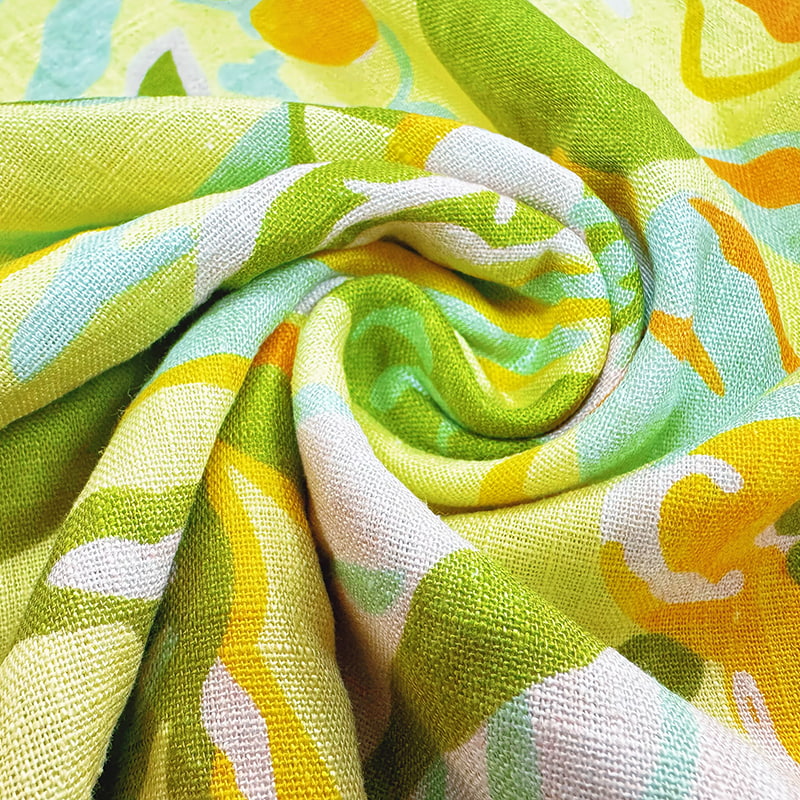 Lightweight and Durable Polyester Cotton Digital Sublimation Printing FabricThis product is made of high-quality/recycled polyester fiber, which achieves the printing effect of bright and saturated patterns and clear details through high-heat ...View Product →
Finishing is the stage where a mediocre 50/50 cloth can be rescued or ruined, and it deserves more attention than it usually receives. A properly built finishing line starts with singeing and desizing to remove surface fibre and residual sizing, moves through mercerising or caustic treatment where the cotton content justifies it, and then applies the mechanical and chemical finishes that define the final character. Sanforising controls residual shrinkage, which matters enormously on a blend that a buyer expects to be dimensionally stable. Softening agents improve hand feel but can reduce tear strength if they are over-applied. Anti-pilling finishes reduce the surface fuzz that plagues blends, though they rarely eliminate it completely. For products that need a crisp, durable surface, resin finishing adds shape retention at the cost of some breathability. The order in which these steps are applied, and the tension maintained through each stage, determines whether the finished roll delivers on the promises made in the specification. This is why the finishing partner matters as much as the greige supplier, and why experienced buyers ask to see finishing records rather than relying on a certificate alone.
A practical selection process starts with four questions that have nothing to do with the blend ratio. First, what is the wear environment? A garment laundered industrially twice a week behaves nothing like one washed at home once a fortnight, and the fibre balance that survives the first will feel unnecessarily stiff in the second. Second, what is the skin contact expectation? If the fabric touches bare skin for hours at a time, a balanced blend is a compromise the wearer will notice. Third, what is the colour standard? Deep blacks, saturated navies and bright reds behave differently on a blended ground than on cotton alone, and the lab dip approved on one substrate may not reproduce on another. Fourth, what documentation does the buyer need? Certification for restricted substances, traceability of raw fibre, and declarations around recycled content all depend on the upstream chain, not on the weaving mill alone. A responsible supplier will discuss these points before quoting a price, because the answers change the yarn, the construction and the finishing route.
 100% Cotton Plain Weave Fabric100% Cotton Plain Weave is a classic cotton fabric highly appreciated for its natural softness and skin-friendly feel. Woven using a plain weave, the yarns are tightly...View Product →
Beyond those four questions, the technical specification sheet is where most sourcing mistakes are made and where most of them can be avoided. Weight per square metre determines how the cloth hangs and how long it lasts, and a difference of twenty grams can change a garment from substantial to flimsy. Yarn count drives surface smoothness and print resolution, so a fine count is essential when detailed artwork has to reproduce cleanly. Shrinkage figures should always be quoted after a defined wash cycle, never as a vague promise of pre-shrunk. Colour fastness needs to be stated separately for washing, rubbing, light and perspiration, because a fabric that passes one test comfortably can fail another badly. Tear and tensile strength indicate how the cloth will behave during cutting and sewing, and they matter more than most buyers expect on lightweight constructions. Finally, certifications tied to responsible production give brand owners the documentation they need when their own customers ask difficult questions. Working with a supplier that can match the fibre blend to a suitable print and finishing route, and that can show certification such as OEKO-TEX certified digital printed fabric where the programme requires it, removes most of the guesswork from a blended-fabric order.
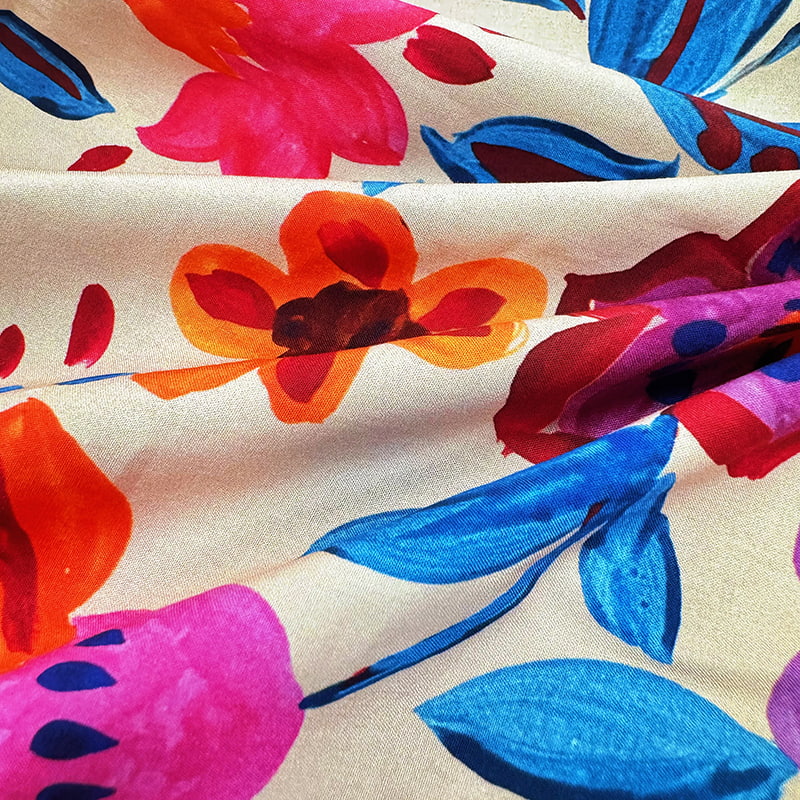 Durable and Comfortable Cotton Reactive Printing FabricThis product is made of 100% premium cotton fibers. Through an eco-friendly reactive printing process, the patterns are delicately and firmly printed on the fabric sur...View Product →
 Wholesale Digital Printed Fabric Manufacturers
 English
 中文简体
 Español
 عربى