2026.09.15
 Industry News
Content
Does polyester fabric shrink when washed? It is one of the most common questions we hear from clothing brands, designers, and apparel factories. The honest answer is that pure polyester shrinks very little, but heat can push any polyester fabric past its stability limit. We run a textile mill that prints and finishes polyester every day, so we see shrinkage behavior up close: how it starts, which blends are risky, and what a fabric supplier can do during production to keep dimensions stable. This guide shares that experience in practical terms.
To understand why polyester behaves differently from cotton or rayon, look at the fiber itself. Polyester is a manufactured fiber built from long-chain polymer molecules. The chains are straight, tightly packed, and set into a stable shape at high temperatures during production. That heat setting gives the fiber a kind of memory: it wants to keep the dimensions it was given at the factory.
Cotton and rayon, by contrast, are cellulosic fibers that absorb a lot of water. Water molecules push between the polymer chains, the fibers swell, and when the fabric dries, the yarns can tighten into a more compact structure. Polyester absorbs almost no water; typical moisture regain is below 0.4%. With so little water entering the fiber, there is little mechanical reason for a 100% polyester fabric to draw together in a normal wash.
This is why the question "does polyester shrink in the wash" does not have a simple yes or no answer. In cold or warm water, without strong agitation, a polyester fabric will usually hold its size to within 0.3%. The trouble begins when heat enters the picture.
We wash-test every new batch of fabric at our mill, and the results for 100% polyester are remarkably consistent. Here is what actually happens under different laundering conditions.
| Wash and dry condition | Typical shrinkage | What happens to the fiber |
|---|---|---|
| Cold wash, air dry | 0 to 0.3% | No noticeable relaxation |
| Warm wash, low tumble dry | 0.5 to 1% | Fiber begins to relax slightly |
| Hot wash, high-heat dryer | 1 to 3% | Polymer chains release internal stress |
| Boiling water or very hot iron | 3 to 5%, melting risk | Fiber softens; deformation likely |
As the table shows, polyester can shrink when washed, but mainly when the water or the dryer is too hot. One to three percent may sound small. On a 1.5-meter fabric length, 3% equals about 4.5 centimeters of movement; on a tailored garment, it is enough to change the fit completely. So the real question is not whether polyester shrinks, but how much heat it meets.
Polyester has a melting point above 230°C, but the fiber does not wait until melting to move. When the wash temperature climbs above 60 to 70°C, the molecular chains begin to relax, and the fabric can release tension stored during manufacturing. A domestic dryer on a high-heat setting easily reaches that range, which is why many people first notice shrinkage after the dryer, not the washer.
Time matters as well as temperature. A long hot wash stresses the fiber just as much as a high-temperature dryer. In our finishing department, we use the same effect on purpose: heat setting at a carefully controlled temperature and speed locks the fabric width in place. That is why a polyester fabric that has been properly heat-set during finishing will shrink far less in the consumer's washing machine than one that has simply been woven and rolled.
Most commercial polyester fabrics are not 100% polyester. Blending adds comfort, drape, texture, or cost benefits. In a blend, shrinkage is a combination of what every fiber does, and the non-polyester component is usually the one that moves.
| Blend type | Shrinkage tendency | Care recommendation |
|---|---|---|
| 100% polyester | Very low | Cold or warm wash, low dryer heat |
| Polyester and cotton | Low to moderate | Cotton can shrink in hot water; keep below 60°C |
| Polyester and rayon or viscose | Moderate | Rayon swells in water; gentle cycle and air dry |
| Polyester and linen | Low to moderate | Linen relaxes in the wash; cool water recommended |
| Polyester and spandex | Low to moderate | Heat damages spandex recovery; wash cold |
Rayon is the fiber we watch most carefully in our printing house. When a polyester and rayon blend is washed hot, the rayon component can absorb a large amount of water and the cloth tightens as it dries. A polyester and linen blend is easier to manage, but linen still has a tendency to shrink slightly if the laundry cycle is aggressive.
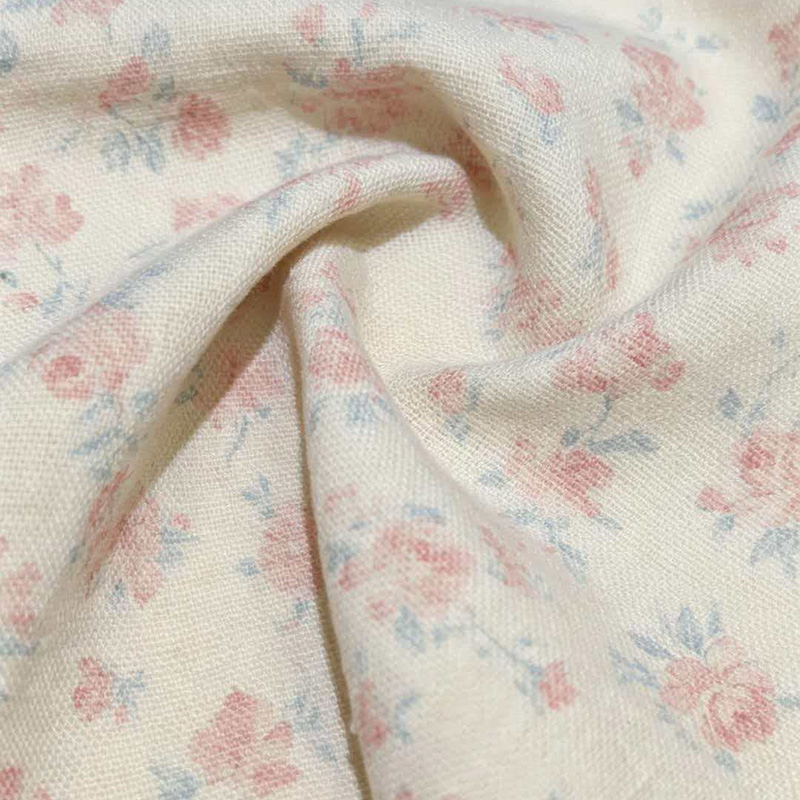
For customers who want the easy-care behavior of polyester with the natural break of linen, our polyester-linen blended fabric is a frequent choice. We digitally print it in-house and balance the finishing process so that the fabric is dimensionally stable before it reaches the cutting table.
 Polyester-Linen Blended Fabric for Dimensional StabilityThis blend combines linen's breathability with polyester's durability and easy care. It is digitally printed in-house and pre-stabilized, making it a reliable choice before cutting.View Product →
With the right laundry routine, a polyester garment or printed fabric will keep both its size and its color for years. We use these steps in our sample testing room and recommend them to every customer.
Follow these steps and the risk of visible shrinkage drops to almost zero, because the fiber never reaches the temperature at which its internal stress gets released.
Polyester is the most common substrate for digital sublimation printing. During the heat transfer process, disperse dyes become gas at around 200°C and penetrate the fiber. The color becomes part of the fabric rather than a coating on top of it, which is why a sublimation-printed polyester fabric resists fading and does not crack or peel.
That durability does not remove the need for careful washing. The heat-setting stage in finishing still decides how stable the fabric will be in the laundry. In our factory, every continuous roll of printed polyester is heat-set after printing, and a wash simulation is run on samples to measure dimensional change before shipment. When the printed fabric starts its life stable, the consumer's washing routine needs to do far less work.
We recently compared the washability of digital printing fabric and cotton canvas in a separate article; the results show clearly why print quality and dimensional stability must be considered together.
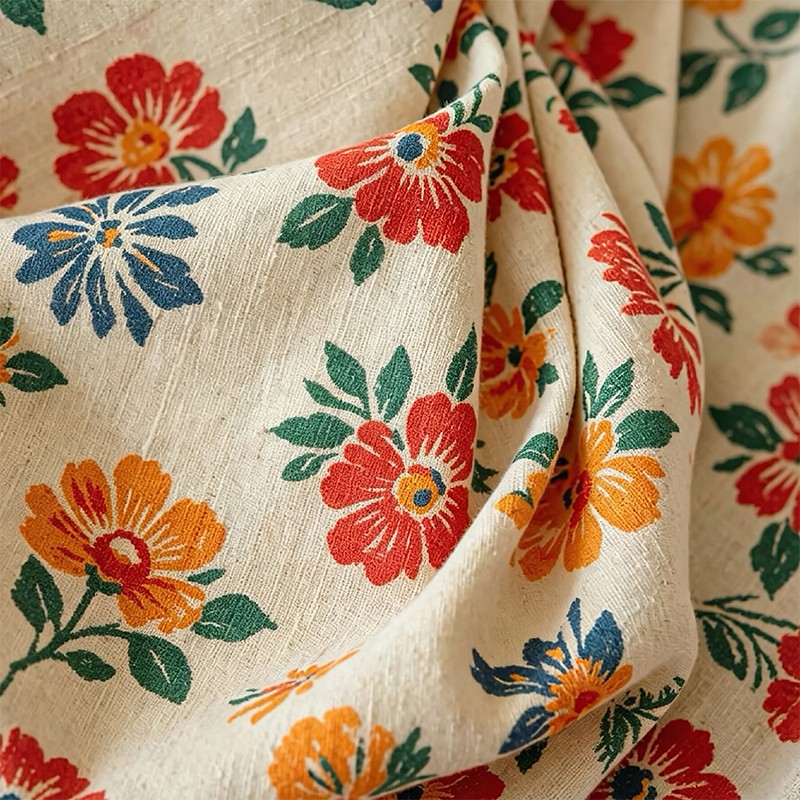
One of our most requested styles in this area is a lightweight and durable polyester-cotton digital sublimation printing fabric. It delivers the color depth of sublimation on the polyester component and a slightly more natural hand feel from the cotton content.
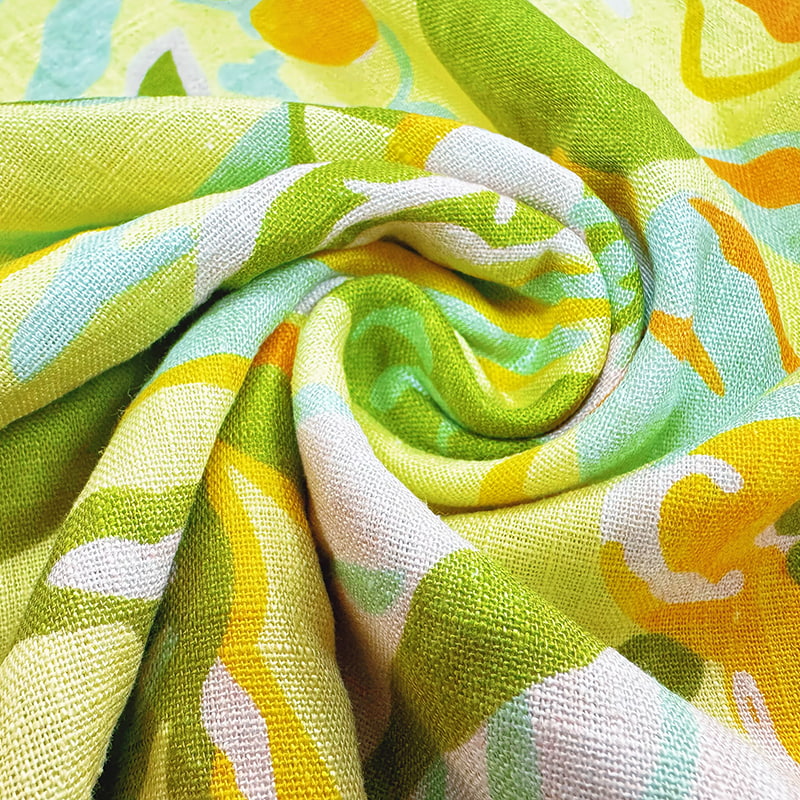 Lightweight Polyester-Cotton Sublimation Printing FabricThis fabric delivers vivid sublimation prints on polyester with a softer cotton hand feel. Its lightweight, quick-drying nature suits activewear and casual styles needing durable color.View Product →
There are legitimate reasons to shrink polyester: a dressmaker might pre-shrink fabric before cutting, or you might want to adjust a garment by a small amount. With polyester, controlled shrinkage is possible, but it always requires heat.
Never run intense heat for more than 30 minutes without checking the item, and do not shrink polyester together with cotton or rayon garments. The other fibers will continue to shrink after the polyester has stabilized, and the result will be uneven. If a garment needs to come in by more than 3%, take it to a tailor instead of risking the dryer.
As a fabric manufacturer, we treat dimensional stability as a production target, not just a laundry concern. The foundation of low shrinkage is laid before any ink touches the cloth. Raw grey fabric enters our plant, then goes through washing, heat-setting, and pre-shrinking so that internal tension is removed early. After printing, one more controlled heat treatment locks the final width and length in place.
Width, weight, and weave tension are measured before production begins.
Controlled temperature and dwell time release fiber stress and stabilize width.
Each printed batch is cured at a temperature high enough to set the dye and the shape.
Samples are laundered and measured to confirm that dimensional change stays within limits.
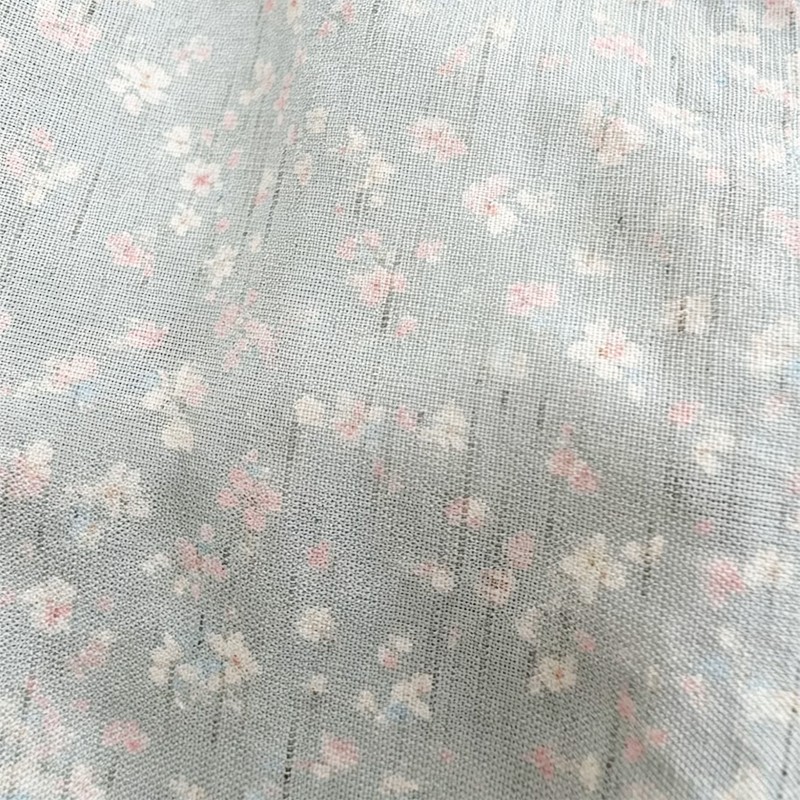
Textured polyester styles show the value of this approach most clearly. Crepe, for example, gets its character from high-twist polyester yarns that relax into a crinkle during finishing. If the heat control is wrong, the crinkle looks uneven or the fabric changes size. When the process is right, a crepe fabric holds its texture and its dimensions wash after wash.
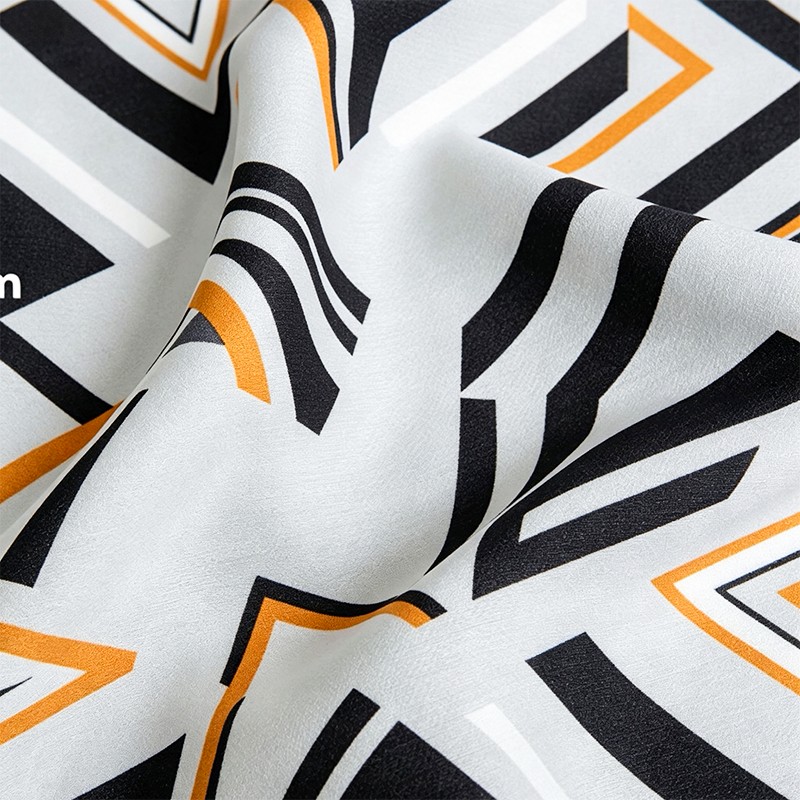 Crepe Polyester Fabric with Textured FinishCrepe polyester gains its crinkled texture from high-twist yarns and careful heat control. It holds its shape and surface through washing, ideal for dresses and spring tops.View Product →
Yes, if the dryer runs at high heat. Polyester fiber begins to relax above roughly 60 to 70°C, and a regular hot dryer cycle can produce 1 to 3% shrinkage. Use the low-heat setting or take the item out slightly damp.
No. Cold water will not cause pure polyester to shrink. Shrinkage in a polyester fabric is almost always the result of heat, either from the water temperature or from the dryer.
Under normal home laundering, expect 0 to 0.5%. In a hot wash and high-heat dryer, expect 1 to 3%. A boiling-water treatment can reach around 3% and brings a real risk of heat damage.
The most likely reasons are a very hot drying cycle or a blend with cotton, rayon, or linen. Check the fiber composition; the non-polyester component is usually the one doing the shrinking.
Not reliably. The polymer chains have relaxed into a new position. A warm steam press can recover a few millimeters, but the fabric will return closer to its shrunk state after the next wash.
 Wholesale Digital Printed Fabric Manufacturers
 English
 中文简体
 Español
 عربى