2026.09.08
 Industry News
Content
The short answer is yes: you can absolutely print on 100% polyester. In fact, polyester is one of the most print-friendly synthetic fabrics on the market today, provided you use the right technique, the right ink system, and a printing partner that understands how synthetic fibers behave under heat and pressure.
The longer answer involves understanding why polyester printing fails when it is treated like cotton, and what experienced textile mills do differently to deliver vibrant, durable results on 100% polyester.
Polyester is a hydrophobic, heat-sensitive synthetic fiber. Unlike cotton, whose absorbent cellulose fibers naturally hold pigment, polyester has a smooth, low-porosity surface and is typically dyed with disperse dyes that live inside the fiber structure. This creates three classic challenges for printers:
These are not reasons to avoid polyester. They are simply reasons to choose printing methods that are engineered specifically for synthetic fabrics.
Dye sublimation is widely regarded as the most durable and comfortable method for printing on 100% polyester. In this process, disperse dye inks are printed onto transfer paper and then heated under firm pressure. The heat converts the solid dye into a gas, which penetrates the polyester yarns and bonds permanently with the polymer structure. The finished print becomes part of the fabric itself: no peeling, no cracking, no raised hand feel, and excellent wash fastness.
Sublimation is especially popular in sportswear, athleisure, swimwear, and any application where breathability and moisture management matter. The technique also supports full-bleed, edge-to-edge designs and photographic color reproduction that are difficult to achieve with traditional screen printing.
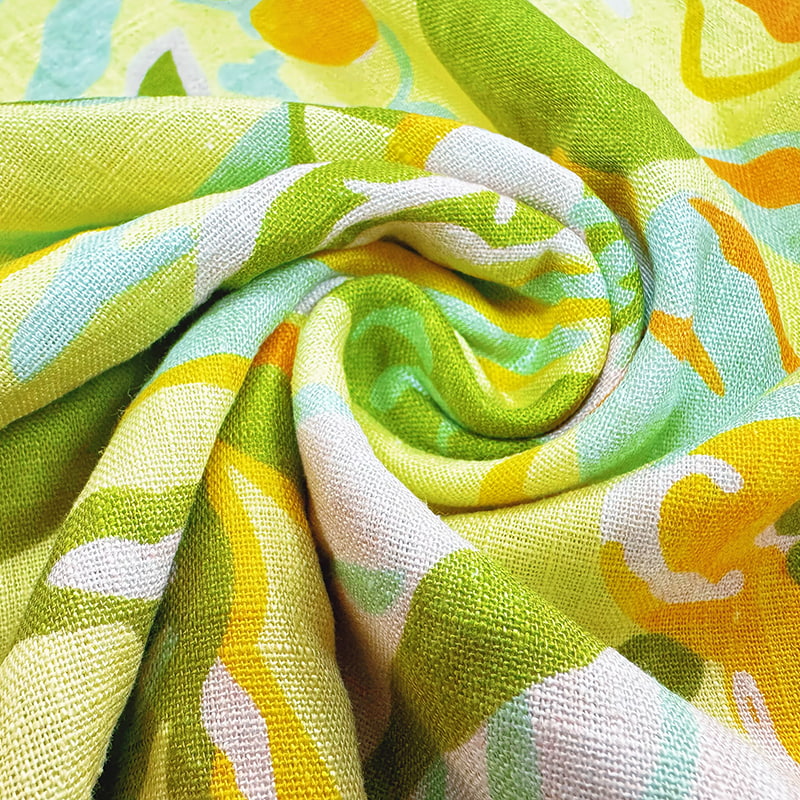 Polyester Sublimation Printing Fabric for High-Detail DesignsThis digital sublimation printing fabric is engineered for 100% polyester, delivering photo-level detail, vibrant colors, and a soft hand feel. Its plate-free process enables small-batch, fast-turnaround orders, making it ideal for sportswear and high-end apparel.View Product →
For brands that need shorter runs, intricate artwork, or fast sampling, digital inkjet printing followed by sublimation transfer is an excellent route. The design is printed onto sublimation paper with a digital printer, then transferred onto the polyester fabric using a heat press or calendar machine.
This method inherits all the durability benefits of sublimation while adding the flexibility to produce as little as a few dozen meters for sample approval or pilot collections. It also gives designers access to unlimited colors and gradients without additional screen charges.
Certain polyester base fabrics suit this technique particularly well. Polyester crepe, for example, offers a softly textured surface and excellent drape, making it a favored ground for blouses, dresses, and fashion tops that need both deep color and a premium hand feel.
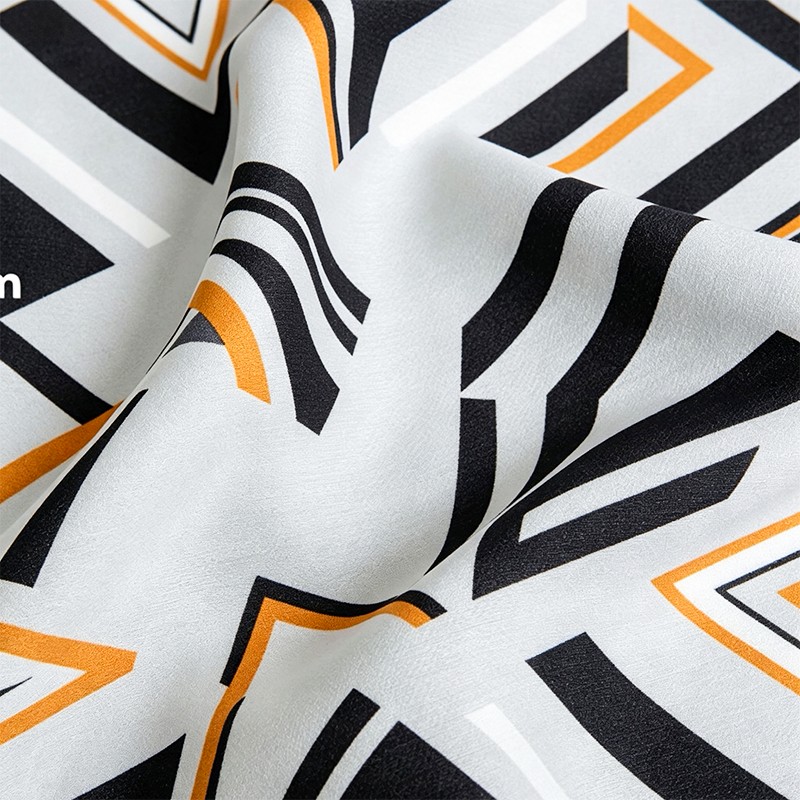 Crepe Polyester Fabric for Flowing GarmentsThis lightweight crepe polyester offers a subtle crinkle texture, breathability, and excellent drape, ideal for blouses and dresses. Its smooth hand and shape retention suit premium summer wear. It also provides a suitable ground for low-cure screen printing on polyester.View Product →
Screen printing on 100% polyester is also entirely possible, but it demands discipline. Standard plastisol inks cure around 320°F, and that level of heat can trigger dye migration. The industry solution is to use low-cure plastisol inks that fully cure in the 260 to 280°F range, or to lay down a barrier underbase in white or clear that blocks disperse dyes from traveling upward into the printed layer.
Water-based inks formulated specifically for polyester are another option, offering a softer hand feel, though they require careful flash curing and precise temperature control. For dark polyester garments, a blocker base is strongly recommended to prevent dye bleeding through light-colored prints.
For names, numbers, and single-color logos, polyester-safe heat transfer vinyl can be applied at reduced temperatures, typically around 275 to 300°F with shorter pressing times. Always test on the actual garment, because different polyester constructions, dyestuffs, and finishes respond to heat differently.
| Method | Ink / Medium | Typical Temperature | Dye Migration Risk | Best For |
|---|---|---|---|---|
| Dye sublimation | Disperse dye | 380-400°F transfer | Very low, dye bonds with fiber | Sportswear, full-color all-over prints |
| Digital inkjet + sublimation transfer | Disperse dye ink | 380-400°F transfer | Very low | Short runs, samples, fashion fabrics |
| Screen printing | Low-cure plastisol or water-based poly ink | 260-300°F | Medium, needs barrier base | Bulk production, bold graphics |
| Heat transfer vinyl | Polyester-safe vinyl | 275-300°F | Low | Names, numbers, small logos |
Temperature control is the single most important variable when printing on 100% polyester. The rules that professional mills follow every day are simple:
Based on years of running digital and traditional print lines, the most frequent issues brands encounter on 100% polyester, together with their solutions, are:
Printing on 100% polyester is not only about choosing an ink. It is about matching the right fabric construction, dye chemistry, print method, and finishing treatment to the end use. That is where a specialized printed-fabric supplier adds real value.
At our facility, we combine digital sublimation, digital inkjet, and traditional printing under one roof, with full color management and in-house sampling. That lets brands and manufacturers move from a single test meter to full production runs without switching suppliers mid-project. As digital printing costs continue to approach those of traditional processes, flexible on-demand polyester production has become a genuinely practical option for businesses of every size.
When you work with us, you can expect:
Absolutely. With dye sublimation and digital transfer methods, polyester is actually one of the most rewarding substrates to print: it produces vivid, long-lasting colors that survive repeated washing far better than many natural-fiber prints. The key is to respect the fiber, use the right ink chemistry, keep temperatures under control, and work with a printing partner that truly understands synthetic textiles.
Whether you are developing a capsule sportswear collection or sourcing printed polyester fabric for a large production run, the right approach makes all the difference.
 Wholesale Digital Printed Fabric Manufacturers
 English
 中文简体
 Español
 عربى